Meet the Editor-in-Chief:
Professor Amanda Kearney
Our conversation with Professor Amanda Kearney, Editor-in-Chief of Anthropological Forum, features a considered reflection on the ethical and relational commitments that underpin contemporary anthropological scholarship. She articulates a vision of research grounded in attentiveness and responsibility, while underscoring the role of empathy as a force in analytical practice. Turning to her editorial work, Professor Kearney outlines a clear commitment to fostering ambitious, globally engaged scholarship and to cultivating a peer-review process that supports authors in developing work that is meaningful.
Can you introduce yourself and share how your journey in anthropology began?
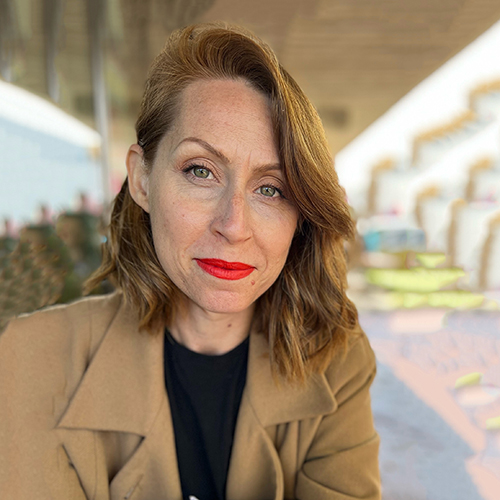
My name is Amanda Kearney. I am an Australian anthropologist. I spent the first two and a half decades of my career working across universities in Australia and as a freelance anthropologist, and in 2023 came to California to take on the role of Professor of Anthropology at San Diego State University.
My life has been made better and richer because of anthropology and the incredible people that have taught me, mentored me, and allowed me to learn through experience and relationships, the myriad types of human experience that occurs across cultures. My journey into anthropology began really as a child and with a sneaking suspicion there was more to the world that my little universe in which I was raised. I was lucky to have a family that nurtured this curiosity and a single mother who moved mountains to ensure I could go to university and study whatever I wanted, without the pressure to study for ‘a job’. It was once I got to university and started studying anthropology, and met incredible teachers that I realised I could make this into a lifelong career. That said, it has never really felt like a job to me, more like a life choice.
As a researcher, what is your approach when engaging with communities that are culturally and linguistically distinct, yet share similar struggles for recognition and justice?
My starting point is that shared struggles don’t mean shared worlds. I have over the course of my career, through ethnography and through engaging the work of communities and other anthropologists, learned that many people face similar pressures, that trace their roots back to hardship, dispossession, environmental damage, and state indifference, but their histories, laws, languages and networks for relating and pathways towards healing and survivance are distinct.
We should never assume that we know someone’s story, nor should we assume too much or too little of their situation in the world here and now. One of the issues I think we face is that we have entered an era of obsessive self-declaration and demarcation of difference and that we delimit ourselves by assuming we know who others are and fully comprehend their experience. We have in many instances forgotten to listen to others as they tell their own stories, and forgotten the value of refrain (as a methodological humility which may involve waiting, not speaking, not writing, and generally being less intrusive), in the interest of learning.
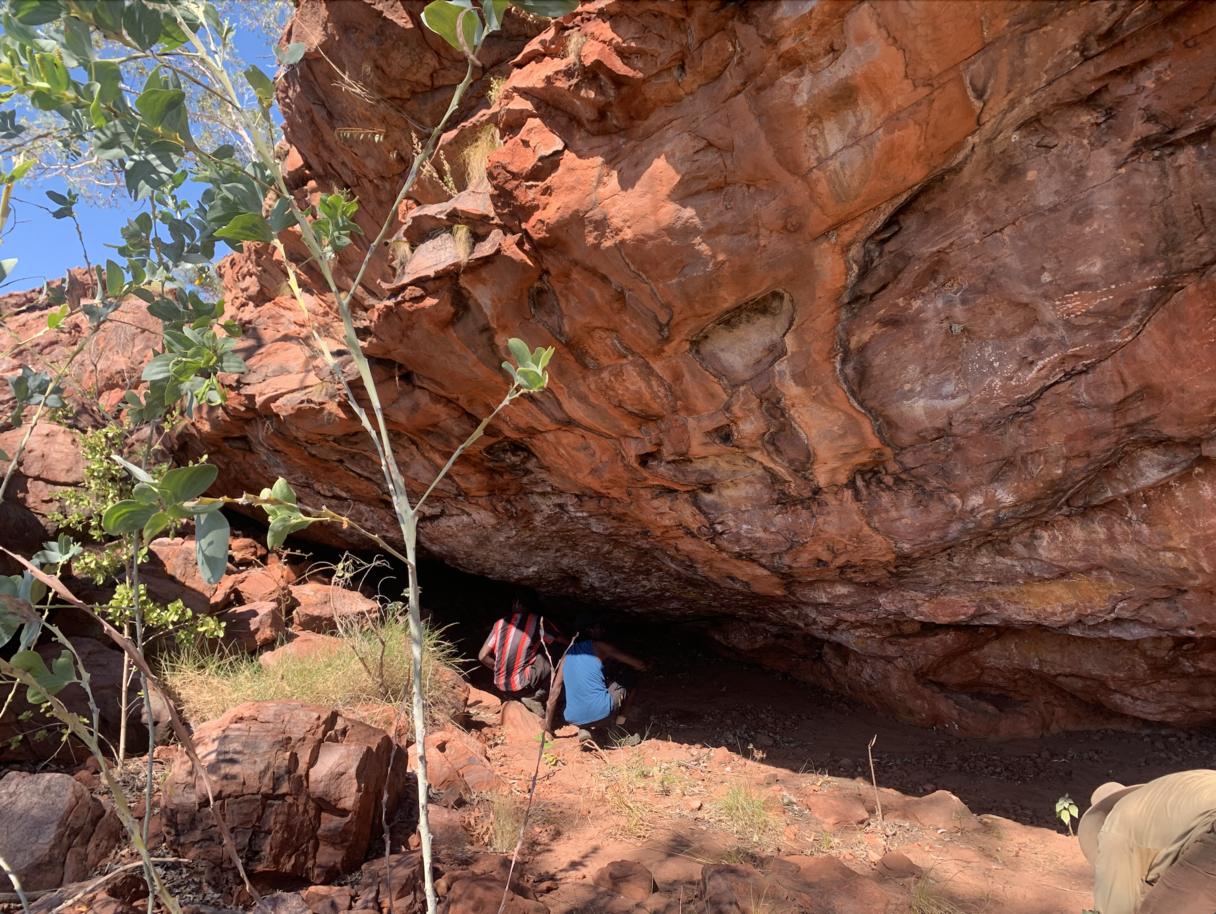
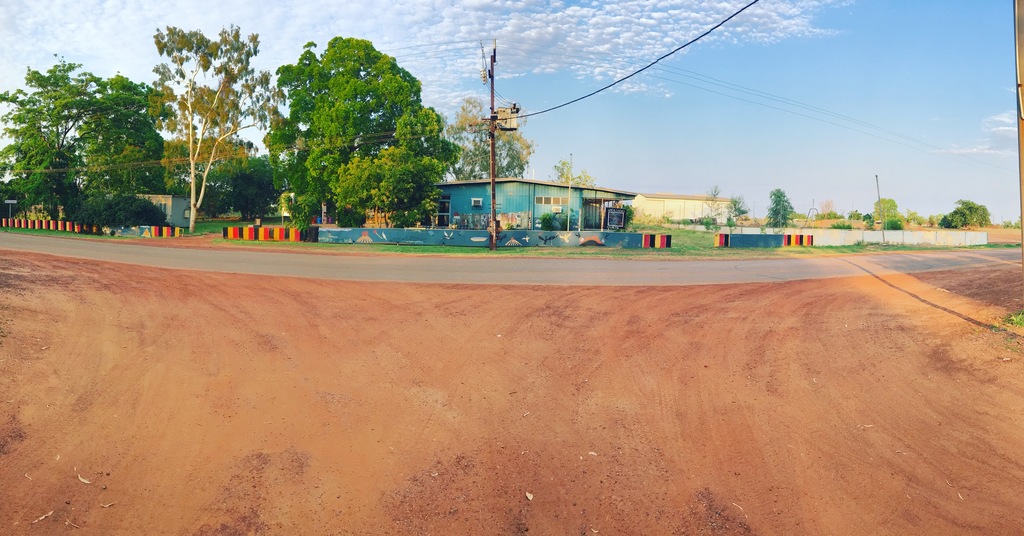
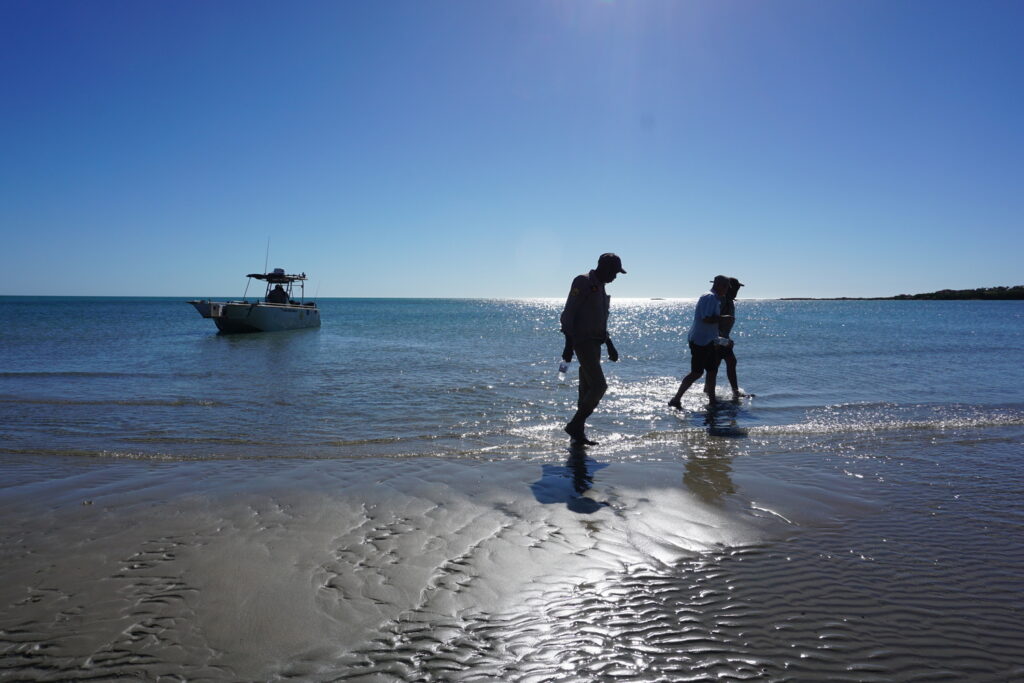
So, my first commitment as an anthropologist, is to arrive as a learner, not as someone carrying a ready-made template of another person or community or struggle. In practice, my approach to engaging with communities has a few layers. I begin with listening. It is important that I spend time in-situ, with people in the places that matter to them, listening to how they name their struggles and responsibilities. With Yanyuwa families in the Gulf of Carpentaria northern Australia, for example, our collaborations have always started with a focus on their Law, kinship and Country (as ancestral lands and waters), not from my research agenda. I work under local leadership and Law, which means working with Indigenous elders mid and younger generations, or with ranger groups, who direct the research and decide what knowledge can be shared.
I am also of the view that when working with culturally and linguistically distinct communities we must stay reflexive about our own position. It is important to recognize the limits of our understandings, to know the privileges we might carry, or even the insignificance of our position in a certain moment or situation. It is also really important, in the context of my research to care about the relationships with my collaborators, whether they are an Indigenous family, or a big organisation that engages me to help them work better cross culturally. I have found over the years that knowing the value of relationships in any research setting is key to successful research.
What role does empathy play in your research and how do you balance it with analytical distance?
Empathy is one of the most valuable skills any one of us can acquire. In my view it makes us not only better researchers, but better humans. It is also what stops us from slipping into self-serving habits and self-interest alone. That said, it’s not always easy, and often a sign of when it is most needed is the fact that it is going to be hard work and is likely to cost you something – meaning that in order for you to be open to the experiences of others and to cultivate some empathic reach, you are going to have to relinquish something of yourself, your views, presumptions, values, comfort in your own position, your time and effort, control or influence.
Empathic reach can help us achieve transformation and expansion of self, because we have to understand ourself in the process of coming to understand another. Therefore, it can be a valuable tool for research. Because empathy is a disposition of openness to variations, a high-level relationality that builds as does rapport and respect with another, I do not see it as in opposition to analytical distance. Instead, it powers a particular kind of analysis; one that is interpretive, relational, and ethically attuned. In anthropology, the risk is that analytical distance alone can take us too far away from our collaborators, the effect being that we will struggle to comprehend the nature of their human experience.
Your book Keeping Company An Anthropology of Being-in-Relation published on Routledge, feels deeply personal but also universal. What lessons from your time with Indigenous families in remote parts of Australia do you think are most relevant to the wider audience today?
Each book I have written started with the urge to tell a particular type of story. Often the catalyst for this will be a personal encounter, an experience or moment of reflection. So yes, there is a personal element to Keeping Company, but that is only the entry point. It is how I find the join between myself and a bigger aspect of research. Once I find the join, it is my job to then shrink the personal and make the project about a bigger question, and challenge that faces humanity. What I love about anthropology is how well we are able to work in a multi-scalar fashion, from the personal and intimate, to the local, the national, the global, the human and even beyond.
I have learned so much from my time spent collaborating with Yanyuwa families. In fact I would say that the opportunity to live and learn with people in remote parts of northern Australia has shaped my whole life. In which case, there are too many experiences to recall but if I were to gather up the lessons from my time with Yanyuwa, I would say that the biggest lesson is that relationships truly matter. Career progression, grant funding, academic promotions, and publications; while all important parts of my working life over the last two and half decades, really pale in comparison to the relationships I have built with Yanyuwa teachers and with my academic mentors.
The value of these relationships over the years has taught me that letting connection grow through how we treat our collaborators and colleagues, and cultivating reputation around decency, respect, generosity and kindness is the strongest form of networking and satisfaction one can strive for. Other lessons that may be relevant to a wider audience today, also concern being in better relation with our environment and the shift in perspective that comes with imagining ourselves as part of a bigger kincentric ecology – we are human, but we are nested into a lifeworld that is made up of many other presences with which we share connection. Try as we might to ignore that reality, it is a simple fact of life. If we can work to accept this, and respect the obligations we have to all the other presences in our kincentric ecology we might find ourselves and others living better.

What led you to become the Editor-in-Chief of Anthropological Forum and what are some key responsibilities of your role that help shape the work of researchers who contribute to the journal?
One of the most beloved aspects of my career is writing and sharing my work with wider audiences. I find writing an absolute joy and have been very fortunate to work with many great editors and I owe a great many thanks to generous peer reviewers who have supported my work to publication over the years. As such, when the opportunity to apply for the role of Editor-in-Chief of Anthropological Forum came up, I responded immediately. Founded in 1963 by the Australian anthropologists Catherine Berndt and Ronald Berndt, Anthropological Forum is a founding, iconic venue for scholarship from Australia and the wider Global South, providing a long-standing platform for locally grounded, globally engaged scholarship in anthropology and comparative sociology.
Some of the key aspects of my role are to attract submissions that align well with our publishing objectives and broader mission, and which ensure the journal maintains its unique identity in a busy world of publishing. As Editor-in-Chief, I stay close to all of the administrative tasks, and work with a wide community of amazing peer reviewers to support our authors in realising their publishing vision with the journal. I dedicate much of my time to overseeing the strategy for attracting quality work, coordinating content that is highly relevant, and which celebrates conventional research and post-conventional approaches and reporting styles. Post-conventional approaches engage with anthropology and sociology in new ways, addressing human challenges and questions in new ways, working with diverse communities of practice; students, other experts, decision makers, knowledge owners and influencers, while testing the waters with new configurations of method and theory, and challenging ethical presuppositions.
I particularly enjoy working with early career scholars who are doing avant-garde and new forms of anthropology, and teams of guest editors who curate special issues that bring together authors from around the world all tasked with addressing a shared concern. It is fascinating to see how differently people craft their research even when gathered around a single topic.

As an anthropologist deeply engaged in post-conventional and relational research, have you encountered any insights or discussions within our journals that resonate with the evolving challenges in the field?
Recently I have been working with a group of authors for a special issue on post conventional anthropology for Anthropological Forum. This is shaping up to be a very exciting issue, and has allowed me to work with a whole range of scholars at various career stages, from doctoral students to early career researchers, to very senior researchers and some of our disciplinary leaders. What stands out to me with this body of work is the creative ways in which people are rethinking the role of anthropology, our methods and practice, for a broader social contract addressing human challenges and the future. I am so proud that Anthropological Forum gets to host these kinds of discussions. We have also had some very powerful and thought-provoking special issues in recent years, on matters of how young people remember violent pasts, forensic and expert social anthropology, emergent axioms of violence, climate change in Oceania, natural disasters and urban marginality. These consistently address the evolving and persistent challenges facing the discipline and our practice.
The Taylor & Francis catalogue of social science journals has published so many critical works that have been instrumental to my own research career, and the journals I turn to most often are Ethnic and Racial Studies, Ethnos, Social and Cultural Geography and Practicing Anthropology. They always offer me something new and inspire new ways of thinking through my existing and emerging research programs.
As an author who has published with Taylor & Francis, what aspects of the peer review and publication process did you find most valuable in sharing your research?
Every peer review I have received has made my work ultimately better. Even when it stings to read a critical peer review report, I can say, with the benefit of hindsight that they are often a generous gift and when engaged carefully can greatly strengthen the quality of our published work. Peer review is in many respects the ultimate act of disciplinary citizenry. It requires people to give of their time, with very little reward, beyond the knowledge that they are contributing to uphold standards of quality within the discipline. This I believe is why most people agree to peer review, and it traces back to the fact that they care about scholarship and doing/promoting good anthropology and comparative sociology.
One aspect of the peer review process that I find most valuable is a timely process, and good communication from the Editor-in-Chief, if there are any delays. I take this aspect into my own role at Anthropological Forum. Another aspect I value is when the Editor-in-Chief, makes thoughtful and respectful decisions in instances when peer reviews are of vastly different opinion. Some research can be polarizing and there can be instances when an author is given a revise and resubmit along with minor revisions. A considerate and invested Editor-in-Chief will, in that instance, adjudicate the outcome with thoughtful consideration on merit and quality of peer review, rather than just default one way or the other.
Looking back at your own career, what advice would you give to young researchers who are just beginning their journey in anthropology? What qualities or mindsets do you think are most essential for someone entering this field today?
What many anthropologists do over the course of decades and cumulative lifetimes of ethnographic fieldwork, relationship building and highly nimble freelance practice, is some of the hardest work around with one of the toughest subjects there is; the human within a vast field of relational potential. This field of relational potential is expanding and getting tougher and often more complicated with growing power differentials every passing decade.
With this in mind, my advice to those embarking on their studies, early career researchers and those entering the field for the first time, is to embrace your skills as ‘unapologetically relevant’ in the world today. Anthropology has been the subject of a lot of critique over the last two decades, yet it has not stood still in the quest for reflexive introspection, relevance and impact. We need anthropology more than ever before and what we do as social scientists is not about ‘soft skills’, it is hard and meaningful work.
As young researchers or early-career anthropologists, one of the most important things you can develop is translational expertise; the ability to turn your training into language and value that others recognise. Learn to describe your skills clearly, to see where they fit in different sectors, and, yes, to monetise them. Many employers don’t yet know what anthropology can do; your task is to show them. Your training gives you a powerful toolkit: critical thinking, cross-cultural literacy, ethical judgement, story-telling and other writing skills, collaborator engagement, diplomacy, and ethnographic methods. If you use your skills well, and invest genuinely in relationships with your research collaborators and partners, you really can produce work that matters and which will enrich your life.
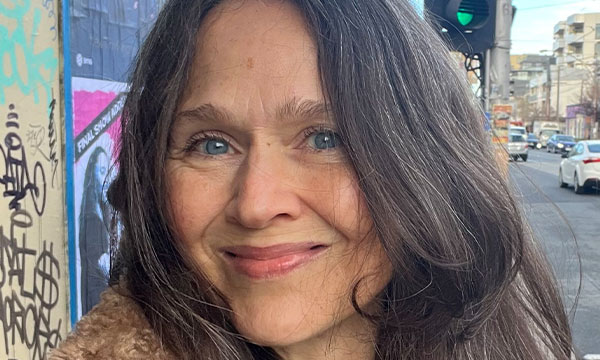
Insights from one of the authors of Anthropological Forum
Find out more about Professor Sarah Pink and her article Futures Anthropology for the Polycrisis. where she calls for an anthropology that moves beyond observing crises to actively imagining ethical and inclusive futures grounded in people’s everyday experiences.
About the Journal
Founded in 1963, Anthropological Forum seeks to examine and advance disciplinary approaches in its publication of articles from a variety of anthropological and sociological perspectives, ranging from the established to the experimental. The editors welcome empirically based ethnographic studies and probing theoretical explorations dealing with global processes and local instantiations, particularly, but not exclusively, in the journal’s traditional areas of focus: Aboriginal Australia, Australian culture and society, the Pacific and Southeast Asia.