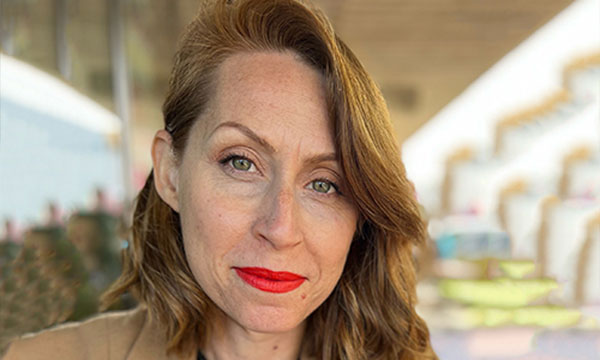
Meet the Author: Prof. Sarah Pink
In this insightful Q&A, we speak with Professor Sarah Pink, author in Anthropological Forum, about her article “Futures Anthropology for the Polycrisis”. In it, she calls for an anthropology that moves beyond observing crises to actively imagining ethical and inclusive futures grounded in people’s everyday experiences. Renowned globally for her interdisciplinary research, Professor Pink’s work bridges design, futures anthropology, and creative practice, fostering collaboration across disciplines both within and beyond academia.
Prof. Pink published her article Open Access (OA) making it free to read for all. She was able to do this through the CAUL agreement, between Taylor & Francis and Australia & New Zealand institutions, which you can read more about here.
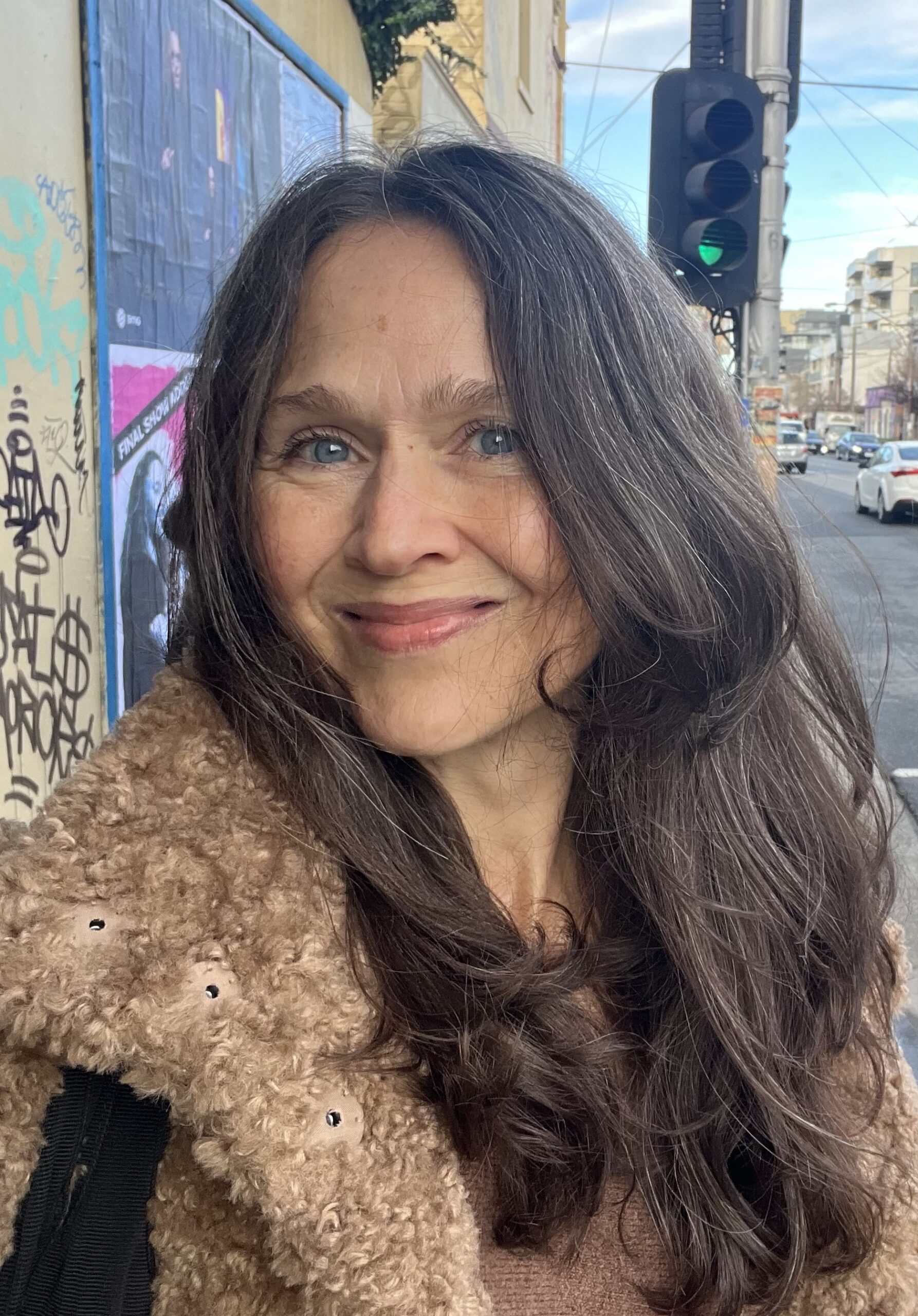
Can you introduce yourself, give us a brief description about who you are, and where you are based in the world.
I’m a futures anthropologist and documentary filmmaker and I practice engaged scholarship. This means I am committed to theoretical and conceptual scholarship, methodological innovation and creative practice, which I often bring into dialogue with interests from outside academia. I started my career in the United Kingdom and am currently founding Director of the Emerging Technologies Research Lab and FUTURES Hub at Monash University in Australia, where I am an Australian Research Council Laureate Fellow.
In your article, you describe anthropology as uniquely positioned to understand how people experience change. In your view, why is this kind of understanding so vital for addressing today’s overlapping global challenges?
Futures anthropology examines how people experience possible futures, and the question of how people experience change, emotionally, sensorially and socially in the everyday environments in which they live and constitute supports this focus. Anthropology shows us how people reshape technologies as they become part of life, how we live in and create diverse environments and how everyday ethics and values influence change processes. Surely if we fail to attend to this layer of situated knowledge, then we will never comprehend global challenges or the intersections between them.
As the world faces constant technological, societal and environmental changes, how do you see the role of anthropology evolving to stay relevant and engaged with the futures it seeks to understand?
I believe futures anthropology is vital to the discipline’s own futures. This includes: a departure from the anthropology of the present soon-to-become-past and towards anthropology in diverse presents and towards possible futures; an ethical and inclusive conceptualisation of futures as plural, possible and uncertain; a shift from the disciplinary inward facing celebration of ethnographic theory towards outward looking conceptualisation; an extension of traditional ethnography through creative, speculative and innovative methodologies; and a commitment to engaged scholarship and new plural, diverse and inclusive epistemic relations.
In your recent book Can We Trust Technology?, you describe trust as something emotional and relational rather than engineered. How does recognising that change the way we think about technology’s role in our lives?
A key concept in Can We Trust Technology? is trusted futures. The idea is to shift from the assumption that engineers can deliver trustworthy technologies, which are designed to win people’s trust and acceptance and which consequently will shape our future societies and lives – for example, dicta like “if only people would trust and accept trustworthy self-driving cars then society would accrue the road safety, human wellbeing and environmental sustainability benefits that they promise to deliver”. Can We Trust Technology? suggests asking instead: what would make our possible futures feel trusted – that is when we feel for instance, confident, safe, included and in control in the everyday environments in which we live?
By answering this through futures anthropological research we can suggest how to design technologies that could participate in the constitution of inclusive future planetary wellbeing. Such an approach takes diversity as the starting point to consider possible planetary futures with people, other species and environment. The book suggests this mode of thinking could help us to consider trusted futures. However, it would be naïve to think of it as a template for designing futures; it is simultaneously a demonstration of how to consider anthropology’s intersectoral and interdisciplinary relations by foregrounding conceptual thinking.
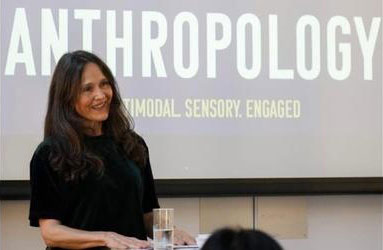
Photo by Grace Pink 2025.
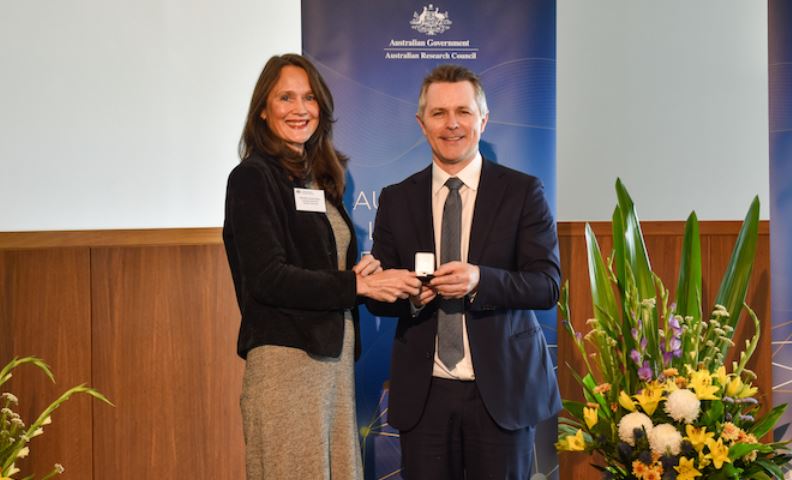
As both a researcher and an award-winning documentary filmmaker, why do you believe storytelling through film is able to help people understand complex research on futures in a more empathetic way?
My training as an anthropological documentary filmmaker through the MA in Visual Anthropology at Manchester University was the single most important influence in my career. Ethnographic documentary practice – whether as a fieldwork method or as filmmaking – creates connection between my own situatedness in fieldwork, the experience of the participant and viewers of the film work. The camera offers participants a pathway towards sharing and demonstrating experience. When translated to futures video ethnography, it enables researchers and participants to experiment with and perform experiential and speculative futures possibilities in response to the question of what might it feel like (including sensorially, emotionally and socially) to live in possible futures?

How do you see Open Access impacting the accessibility and potential impact of your research?
I believe publishing Open Access makes my work directly accessible to a wider range of readers, however it’s difficult to measure or compare its ability to extend the academic impact of my work since some of my most cited articles are still behind paywalls. While I celebrate the possibilities Open Access offers, it is not a comfortable privilege, and personally I struggle with the harsh reality that the opportunities to publish open access are unequally distributed.
While Open Access holds the promise of democratizing knowledge, its current structure often amplifies existing inequities within academia. Researchers with strong institutional support or substantial funding can more readily afford publication fees, enabling them to participate fully in the Open Access model. In contrast, scholars from less privileged backgrounds or underfunded institutions face greater barriers to sharing their work openly. I believe these challenges highlight the need for a more inclusive and equitable Open Access system that supports all researchers, regardless of their circumstances.
What would you say to a researcher considering publishing Open Access in an agreement such as this one with CAUL? How has this agreement supported you?
The CAUL agreement provides excellent opportunities for Australia-based researchers at all levels to share their research beyond the academy and beyond the paywall. I would encourage researchers to grasp the opportunity to publish Open Access since it enables the much-needed free sharing of academic work. However, I also remind those researchers to reflect on their situatedness and advantage and to seek to publish ethical and inclusive modes of engaged scholarship which justify this mobilisation of their privilege.
Insights from the Editor-in-Chief of Anthropological Forum
Our conversation with Professor Amanda Kearney, Editor-in-Chief of Anthropological Forum, features a considered reflection on the ethical and relational commitments that underpin contemporary anthropological scholarship.
About the Journal
Founded in 1963, Anthropological Forum seeks to examine and advance disciplinary approaches in its publication of articles from a variety of anthropological and sociological perspectives, ranging from the established to the experimental. The editors welcome empirically based ethnographic studies and probing theoretical explorations dealing with global processes and local instantiations, particularly, but not exclusively, in the journal’s traditional areas of focus: Aboriginal Australia, Australian culture and society, the Pacific and Southeast Asia.