
Submit a Manuscript to the Journal
International Journal of Remote Sensing
For a Special Issue on
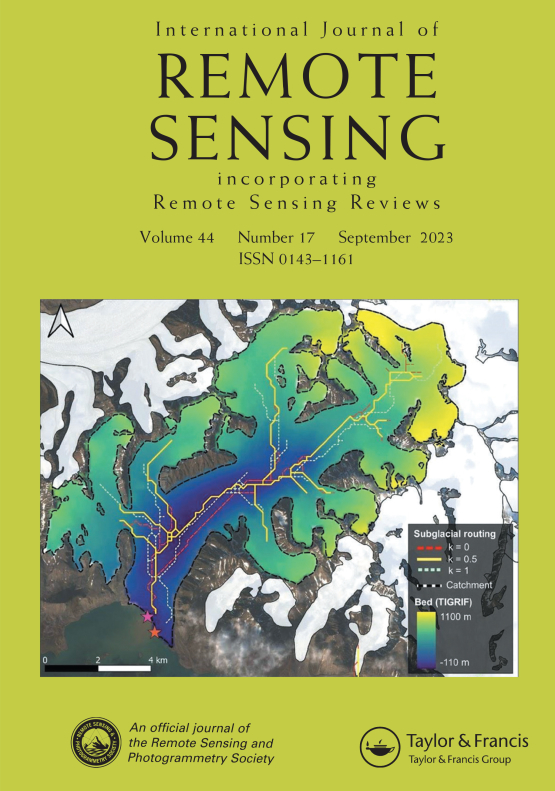
Cryospheric Hazards in a Warming World: Advances in Remote Sensing, AI, and Risk Preparedness
Manuscript deadline
Special Issue Editor(s)
Dr. Rayees Ahmed,
Indian Institute of Science, Bangalore, India
[email protected]
Dr. Anshuman Bhardwaj,
University of Aberdeen, UK
[email protected]
Dr. Lydia Sam,
University of Aberdeen, UK
[email protected]
Dr. Omar Wani,
New York University, USA
[email protected]
Dr. Jérome Faillettaz,
Cerema, Team GeoCoD, Bron, France
[email protected]
Prof. Ulrich Kamp,
University of Michigan-Dearborn, USA
[email protected]
Cryospheric Hazards in a Warming World: Advances in Remote Sensing, AI, and Risk Preparedness
The cryosphere is experiencing rapid and unprecedented changes due to global warming, resulting in a rise in hazards such as glacial lake outburst floods, ice-rock avalanches, snow avalanches, and permafrost-related slope failures. These hazards create significant risks for communities, infrastructure, and ecosystems in mountain and polar regions. This Special Issue will bring together studies that use remote sensing, AI/ML, UAV surveys, and modelling approaches to improve the detection, monitoring, and prediction of cryosphere-related hazards, and to enhance preparedness and risk reduction.
- Focus on remote sensing applications (optical, SAR, LiDAR, UAV, InSAR, multi-sensor) for detecting and monitoring cryosphere hazards.
- Encourage integration of remote sensing with field observations, GNSS/GPS, UAV surveys, bathymetry, seismic measurements, and geodetic data.
- Highlight applications of AI and machine learning for hazard detection, classification, forecasting, and near-real-time monitoring.
- Include modelling studies of GLOFs, avalanches, slope failures, and cascading multi-hazard chains.
- Showcase global case studies from the Himalaya, Alps, Andes, Arctic, and other high-mountain regions.
- Encourage papers linking hazard processes with exposure, vulnerability, community impacts, and risk mitigation strategies.
- Out-of-scope topics include studies without a remote sensing component, purely descriptive case reports, and hazards unrelated to the cryosphere.
Submission Instructions
All submissions will be peer reviewed according to the International Journal of Remote Sensing (IJRS) guidelines. Submitted manuscripts should not have been published or be under review elsewhere. All submissions will be handled through the journal’s online system, and accepted papers will be published online ahead of the final Special Issue compilation.
- Manuscripts should follow standard journal formatting, including section structure, reference style, figure layout, and data presentation requirements.
- When submitting your manuscript, please select the Special Issue title “Cryospheric Hazards in a Warming World: Advances in Remote Sensing, AI, and Risk Preparedness”.
- Authors may include supplementary materials such as high-resolution figures, datasets, or code to support reproducibility.
- Authors who wish to confirm suitability may submit a brief abstract (150–250 words) to the Guest Editor team before preparing the full manuscript.
- Accepted manuscripts will be published online first upon acceptance, with final compilation in the Special Issue at the expected publication date.