
Submit a Manuscript to the Journal
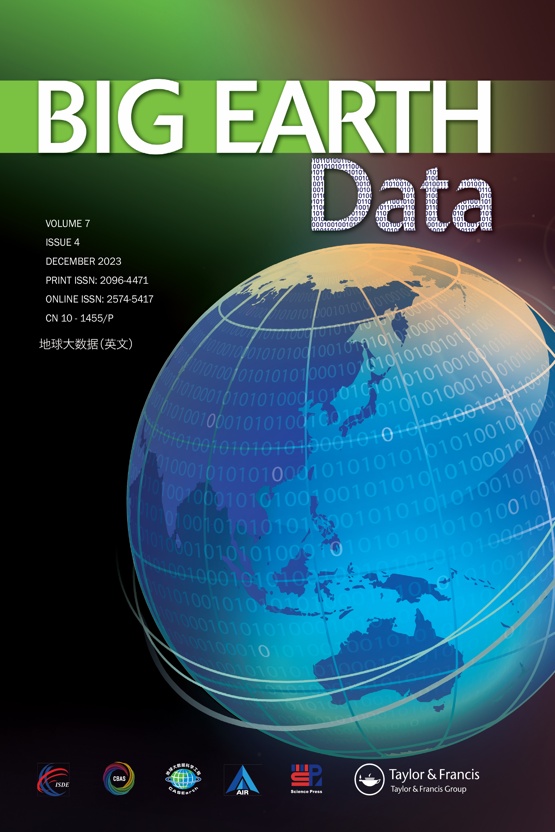
Big Earth Data
For a Special Issue on
Climate change modelling and urban resilience driven by big Earth data and artificial intelligence
Manuscript deadline

Special Issue Editor(s)
Jun Yang,
Northeastern University, China
[email protected]
Yuyu Zhou,
The University of Hong Kong, China
[email protected]
Ashraf Dewan,
Curtin University, Australia
[email protected]
Liang Zhou,
Lanzhou Jiaotong University, China
[email protected]
Alexander Baklanov,
University of Copenhagen, Denmark
[email protected]
Linlin Lu,
Aerospace Information Research Institute, Chinese Academy of Sciences
[email protected]
Climate change modelling and urban resilience driven by big Earth data and artificial intelligence
With the intensification of global climate change, its impacts on natural ecosystems, socio-economic structures, and human health are becoming increasingly pronounced. Urban areas, home to over half of the world’s population and engines of the global economy, are both critical contributors to and frontline responders to this crisis. To better understand and address the challenges posed by climate change, the scientific community and decision-makers urgently require reliable and efficient modeling methods and tools. In recent years, the rapid development of big Earth data and artificial intelligence (AI) technologies has brought new opportunities to climate change modeling, especially at the local scale. Big Earth Data provides vast amounts of multi-source and heterogeneous climate data, while AI technologies can process these complex data to uncover hidden patterns and relationships, thereby enhancing the predictive accuracy and decision-making support capabilities of climate change models.
This special issue aims to showcase the latest global research findings and explore the application of big Earth data and AI technologies in climate change modeling. We are particularly interested in how these technologies can be utilized to advance research on climate change impact assessment, adaptation strategy formulation, resilience modeling and the tracking of progress toward sustainability goals. Through the publication of this special issue, we hope to stimulate more research interest, promote interdisciplinary integration and jointly explore new methods, technologies, and applications in climate change modeling, contributing to the development of a more sustainable and resilient society.
Potential topics include (but are not limited to) the following:
1. Improvement of climate models driven by big Earth data
2. AI-Enhanced climate change prediction and extreme event forecasting
3. Integration of multi-source data and climate change modeling
4. Application of AI in the calibration and validation of climate models
5. Climate change simulation supported by cloud computing and high-performance computing
6. Application of big Earth data and AI in urban climate risk assessment
7. Optimization of Nature-Based Solutions (NBS) with AI and big data analytics
8. Quantifying climate impacts and adaptation progress using SDG indicators
9. Equity and justice in urban resilience
10. Adaptation to extreme climate in mountainous cities
Submission Instructions
Submission Deadline: November 1, 2026
Manuscript Submission Information
Please visit the Instructions for Authors page before submitting your manuscript. Once you have finished preparing your manuscript, please submit it through the Taylor & Francis Submission Portal, ensuring that you select the appropriate Special Issue. Publication charges (APCs) may be waived for invited manuscripts submitted to Big Earth Data, subject to approval based on their quality and potential impact. Authors who need a waiver code should contact the Editorial Office ([email protected]) before submitting.