

Announcement: New Editors at the Journal of Global Ethics
Visit the journalThe Journal is pleased to welcome several editors to our team.
The Editors
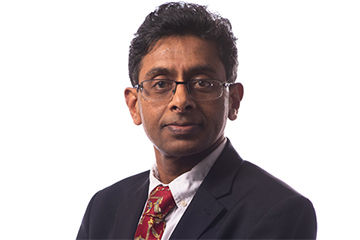
Professor P. B. Anand
P.B. Anand is Professor of Public Policy and Sustainable Development at the University of Bradford, U.K., and was until recently Head of its Division of Peace Studies and International Development (2019-2024). Earlier he headed the Centre for International Development (2010-15). After his education and several years as a development practitioner in India, he did doctoral research in U.K. and has subsequently worked on diverse interfaces between economic, social and environmental dimensions of human wellbeing. He has contributed to several studies for UNDP on sustainable development and was, for example, principal author and team leader of the Mongolia National Human Development Report. With Flavio Comim and Shailaja Fennell he edited New Frontiers of the Capability Approach (Cambridge University Press, 2018) and the Handbook of BRICS and Emerging Economies (Oxford University Press, 2021; lead editor). He is a Fellow of the Institute of Corporate Responsibility and Sustainability, and Fellow of the Human Development and Capability Association (for which he led their 2025 conference in Bradford).
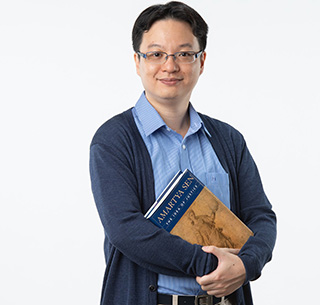
Benedict S. B. Chan
Benedict S. B. Chan is Associate Dean of the Faculty of Arts and Social Sciences, Director of the Centre for Applied Ethics, and Associate Professor in the Department of Religion and Philosophy at Hong Kong Baptist University. He has published widely in applied ethics, covering topics such as human rights, the ethics of war and peace, privacy, technology, and public health. He also works in comparative philosophy (Chinese and Western).
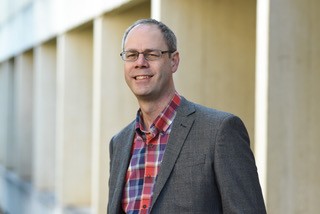
Professor A. J. Langlois
Anthony J. Langlois is Professor and Stan Perron Dean of Applied Ethics in the Faculty of Business & Law at Curtin University and the founding director of the Curtin Centre for Applied Ethics. He was educated at the University of Tasmania and the Australian National University. Langlois is a distinguished specialist on Human Rights and International Ethics, with over 25 years of experience as an educator, author and public speaker.
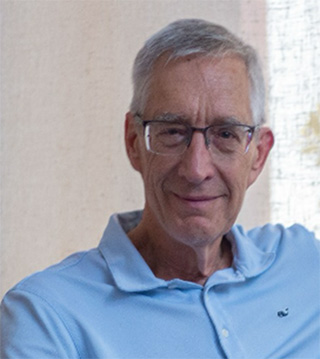
Professor Stephen L. Esquith
As associate editor, Stephen L. Esquith is a professor in the Department of Philosophy, Michigan State University. He has been working on ethical problems in developing countries since 1990 when he was a senior Fulbright scholar in Poland and then again in Mali in 2005-06. While in Poland he collaborated on two collections of essays written by Polish and U.S. scholars on the transition to democracy in Eastern Europe after 1989. His research and teaching since that time has focused on democracy and political violence. He is the author of Intimacy and Spectacle (Cornell, 1994) on classical and modern liberal political philosophy, The Political Responsibilities of Everyday Bystanders (Pennsylvania State University Press, 2010) on mass violence and democratic political education, and Everyday Peacebuilding through Democratic Political Education: The need for radical poise (Palgrave Macmillan, 2025) on the role of the arts and humanities in the cultivation of democratic political virtues. He has co-edited a volume of critical essays on the human capabilities approach to development, and written on children’s human rights, peacebuilding, the role of film in democratic political education, human security, and philosophy for children. He is currently working with colleagues on several community dialogue and everyday peacebuilding projects with internally displaced youth in Mali in collaboration with the Université Yambo Ouologuem de Bamako, Mali and a similar peace education project for refugee youth in Michigan.