
MENA Publishing Ethics Guide
Strengthen your understanding of ethical journal publishing
Understanding Key Ethical Issues
Familiarise yourself with each key ethical issue and ensure you’re well equipped to submit and publish your research.
Simply scroll down and select each issue you would like to learn more about.
To download the full PDF book, click here.

Each author listed on a journal article should have made a significant contribution to the work reported. This could be in terms of research conception or design, or acquisition of data, or the analysis and interpretation of data. As an author or co-author, you share responsibility and accountability for the content of your article.
An example of authorship criteria can be seen here.
Before submitting a journal article, authors should:
Ensure agreement about who the corresponding author is.
Agree the order of co-authors and the venue (i.e. the journal) the article is being submitted to.
Ensure affiliations are accurate, and that contact details are complete.
Ensure that anyone listed as an author has fulfilled the journal’s authorship criteria, and is aware their name is on the article.
Some journals also use the CRediT contributor role taxonomy, which can be used to identify contributions made to a research article: https://credit.niso.org/

Where someone has made a contribution to the work, but does not meet the authorship criteria for the journal, you may consider adding them to the acknowledgments. If you are adding someone to the acknowledgments, you should ensure that permission is obtained from that individual to include their name. You should do this prior to submission — this can additionally avoid any authorship disputes, should they believe they should actually be listed as an author.

Authorship changes post-submission should only be made in exceptional circumstances, and any requests for authors to be removed or added must be in line with the respective journal’s authorship criteria.
If you need to make an authorship change, you will need to contact the Journal Editorial Office or Editorial team in the first instance. You will typically be asked to complete an authorship change request form by the journal, which will require signature by all authors (including those added or removed).
When submitting your manuscript, make best efforts from the start to include anyone who qualifies as an author; many journals will decline post-submission authorship changes.

Gift (guest) authorship
This is where someone is added to the list of authors, but they have not made a significant contribution to the work, and they do not meet the authorship criteria. This sometimes happens where researchers think adding a ‘big’ name in their research field is a form of flattery, or that it will help them to get their paper published. This is not the case, and may result in the paper being rejected, retracted or your institution informed.
Ghost authorship
Where someone has made a significant contribution to the work and meets the authorship criteria, but is not included in the list of authors. It is crucial that anyone who qualifies as an author is listed as an author on the submission. If you have engaged a writing agency, agree with them in advance if they will meet the authorship criteria. If they do not, ensure they are included in the acknowledgments for full transparency. If this is not disclosed, you may face claims of ghost authorship or undisclosed competing interests.
Authorship for sale
This is where an individual sells their paper to a ‘papermill’ , or offers authorship slots for their paper for sale. They will typically submit their paper to a journal and if the submission is not immediately rejected, they will advertise the paper on social media (such as Facebook, Telegram) with varying fees depending on the author positions (i.e. more money for 1st, less for 4th). The individuals buying these authorship positions will not meet the journal authorship criteria.
Once these slots are bought, the original author will make an authorship change request. In some cases, papermill organisations will sell the same paper to multiple author groups, resulting in duplicate submissions and reputational consequences for the authors involved.
This is not a grey area- everyone knows that this is inappropriate behaviour; where this is discovered, it may result in rejection, retraction and informing all authors’ institutions, where the researcher may face a full misconduct investigation.
For more information visit: https://authorservices.taylorandfrancis.com/editorial-policies/%20plagiarism/

According to the Committee on Publication Ethics (COPE), plagiarism is when somebody presents the work of others (data, words, or theories) as if they were his/her own, and without proper acknowledgment. In addition to the direct copying of text, with or without paraphrasing, from a single source without proper acknowledgment, the common types of plagiarism are:
Mosaic plagiarism (patchwork plagiarism)
This is when text is lifted from a few different sources (which may include your own previous work) and inserted into your manuscript to create the impression of new text. This includes rewording pieces of sourced material while keeping the structure/syntax of the original texts.
Self-plagiarism/text-recycling
This refers to the reuse of your own previously published work (e.g., text, data, and images), including text translated from another language, usually without proper citation or acknowledgement. It creates redundancy in the academic literature and can skew the results of systematic reviews or meta-analyses, particularly if you publish the same sets of data multiple times as “new” data.
Two forms of self-plagiarism are:
Redundant or duplicate publication is the publication of what is essentially the same paper in more than one journal, but without indication that the paper has been previously published else where.
Salami slicing (salami publication) is the segmentation of a large study that should have been reported in a single paper into smaller published studies.
What to do if one’s own work has been plagiarised and published?
In such a case, the author should contact the Editor(s) or Publisher of the journal where the work has been published and provide specific evidence indicating that your research has been plagiarised. The complaint will be investigated further by the Editor(s) of the journal in consultation with their publisher.
What is the plagiarism of ideas?
According to the Office of Research Integrity, plagiarism of ideas is “appropriating someone else’s idea (e.g., an explanation, a theory, a conclusion, a hypothesis, a metaphor) in whole or in part, or with superficial modifications without giving credit to its originator.”
For more details on our plagiarism policies and guidance for authors, visit: https://authorservices.taylorandfrancis.com/editorial-policies/
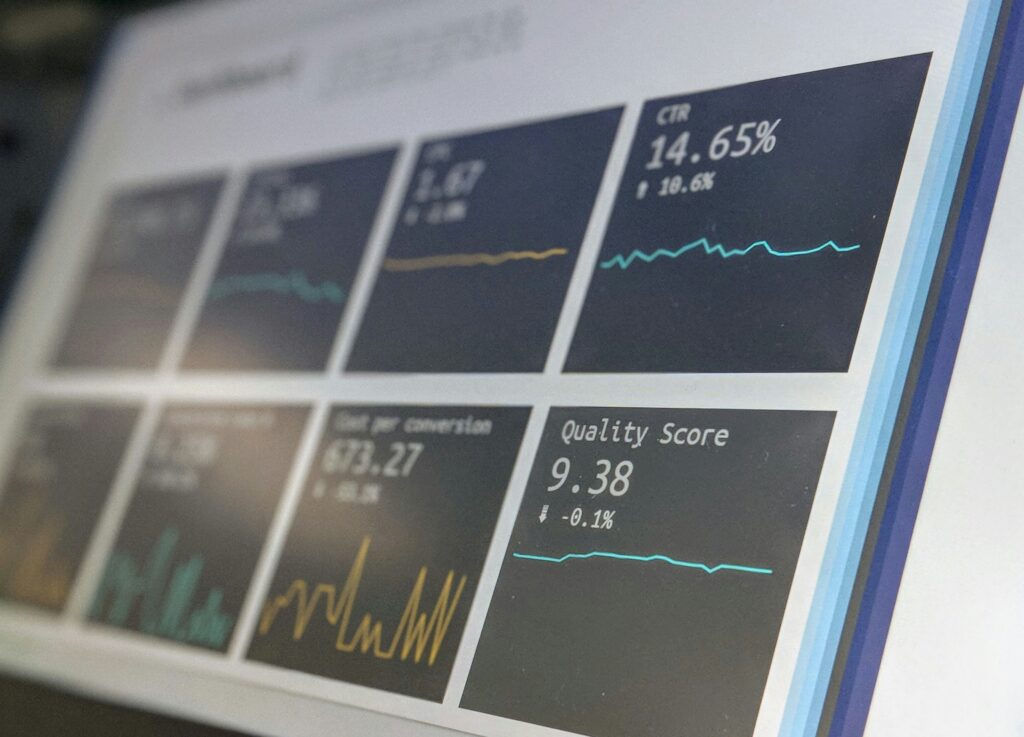
Research data can take many forms, but it is essentially the underlying evidence upon which the claims made in your publication rely.
Sharing this data publicly helps to maximize the discoverability and impact of your research. It also improves the robustness of the research process, supporting validation, research transparency, and reproducibility and replicability of results.
Researchers should also be aware that inappropriate manipulation of fabrication of images or data is a serious form of misconduct as it is designed to mislead others and damages the integrity of the scholarly record. Researchers should be aware that journals may ask for raw data and images at any point in the publication journey, including post-publication. Where possible, researchers should ensure that any data which underlies their research is safely stored and accessible upon request.
Some journals request that you upload raw data as a supplemental file for publication, while other journals and platforms such as F1000 Research have open data policy, requiring the raw data underlying an article to be openly available, so it’s crucial to be aware of a journal’s data sharing policy when submitting your work.
For more information visit: taylorandfrancis.com – f1000research.com
Some funders and publishers now make data sharing a requirement and it’s become increasingly commonplace for some subject areas to make data available to everyone. For our guide on sharing and citing data, visit:

What is a competing interest?
A competing interest (also known as a “conflict of interest”) can occur when a researcher (or their employer or sponsor, or family/friends) has:
a financial, commercial, legal, or professional relationship with other organisations.
or with the people working with them.
or any type of non-financial incentives which could, or be perceived to, influence the outcomes or interpretation of the research findings.
A competing interest is any situation which could potentially influence, or be perceived to influence how the researcher conducts or reports their research, or how a researcher’s work might be assessed by an institution, other researchers, the journal’s editor, or its peer reviewers.
For example, a case of a researcher working in the area of drug discovery who also owns stock or shares in a pharmaceutical company could be perceived as a competing interest.
Another example might be a researcher who has previously received a speaking fee from a think tank, whose interest directly relates to the topic of their research article. Conflict of interests can be financial or non-financial in nature. Upon submission of your article, you and all of your co-authors must declare any competing interests relevant to, or which can be perceived as being relevant to the article.
Personal fees received by the authors as honoraria, royalties, consulting fees, lecture fees, or testimonies.
Patents held or pending by the authors, their institutions, funding organisations, or licensed to an entity, whether earning royalties or not.
Stock or share ownership.
Holding a position on the boards of industry bodies or private companies that might benefit, or be at a disadvantage financially or reputationally from the published findings.
Writing assistance or administrative support from a person or organisation that might benefit, or be at a disadvantage from the published findings.
Personal, political, religious, ideological, academic and intellectual competing interests that are perceived to be relevant to the published content.
Receipt of drugs, specialist equipment, tools, computer programs, or digital applications.
A competing interest is not necessarily a bad thing; transparency allows the Editor to make an informed decision and allows the reader to be clear about the reported results. The crucial part is to be honest and transparent about any competing interests, whether actual or perceived. This can include sources of research funding, direct or indirect financial support, supply of equipment or materials, or other support.
To read our full guidelines on what a competing interest is and how to declare it when you submit your paper, visit: https://authorservices.taylorandfrancis.com/editorial-policies/competing-interest/

Authors should be aware of unethical publishing organisations and agents, and avoid using these services. In many cases, these organisations will take the researchers’ money and provide no service. However, the use of these services also leads to dishonest publication and authorship, potential loss of funds and damage to the reputation of authors and their institutions.
Predatory agents and journals will typically deceive authors into believing they are submitting articles on their behalf to reputable journals, when in reality they are predatory journals which aim to defraud researchers under the guise of another journal’s name.
The Committee on Publication Ethics (COPE) defines predatory publishing as “the systematic for-profit publication of purportedly scholarly content in a deceptive or fraudulent way and without any regard for quality assurance” or “commitment to publication ethics or integrity of any kind.”
Common features of predatory publishers include:
Hidden or unclear fees
Lack of contact details (telephone, email, or postal address)
Lack of quality peer review
Guaranteed acceptance and/or promise of speedy publication times
Unlikely turnaround times from submission to acceptance
An urgency for you to transfer payments (usually with a fake invoice, or via untraceable money transfers)
These journals may target researchers via:
Email
Social media
Conferences
Following the publication of a different previous article
They will often use social engineering techniques to deceive researchers, and then will hold the paper to ransom (i.e. take a ‘publishing charge’, but not publish the paper). They will then rely on shaming the researchers involved, so that they don’t warn their peers.
If authors are unsure, before they submit anything, they are encouraged to consult their peers, institutional librarian or thinkchecksubmit.org to verify whether a journal or publisher is reputable.
If a researcher believes they’ve submitted to a predatory title, they should discuss this with their department head or institutional legal team before taking any action. They should not submit the same paper to another journal in the interim as this could be considered duplicate submission or self-plagiarism.
What is Think. Check. Submit?
Think. Check. Submit. is an international and cross-sector initiative to educate researchers, promote integrity, and build trust in credible research and publications, in responding to the discussion around predatory publishing.
Think. Check. Submit. helps researchers identify trusted journals and book publishers, through a range of tools and practical resources.
Their website offers two checklists to help authors verify whether or not a publisher is suitable for their research.
Books and Chapter: https://thinkchecksubmit.org/books-and-chapters/
Journals: https://thinkchecksubmit.org/journals/

Authors should also be aware of “paper mills.” Paper mills are commercial organisations, often with unclear business structures, which:
Generate fake manuscripts.
Sell authorship on manuscripts.
Facilitate fake peer reviews, and create fake reviewer accounts.
Citation farm (the act of inserting irrelevant citations for money).
Offer to cite your own work in their articles in exchange for money.
These companies can be found across the globe, and their articles compromise the integrity of the scholarly record with fraudulent research.
Some paper mills may look like genuine “author services” companies, such as the ones offering language editing or translation services. They may also offer to handle the article submission process for authors, which is where they may also sell the authorship for the article or insert any irrelevant citations.
When researching author services, authors should scrutinize them via online reviews and peers’ experiences to avoid potentially unethical activity. If something seems too good to be true, or they guarantee acceptance, researchers should not use that service.
Where researchers engage with these organisations, they may sometimes be the victim of extortion (i.e. the papermill threatening to inform the researcher’s institution that that research tried to buy a paper).
Additionally, where suspected papermill submissions are identified, they may be rejected (if detected pre-publication) or retracted (if detected after publication). Journals may additionally inform a researcher’s institution or funder if they believe the researcher has engaged in papermill activity. This can have a significant impact on both the reputation of the authors and their institutions.
For more information, please refer to the following links:

The use of artificial intelligence (AI) tools in research and writing is an evolving practice. AI-based tools and technologies include, but are not limited to, large language models (LLMs), generative AI, and chatbots (for example, ChatGPT, Claude, Grok).
Below we restate our guidance on author accountability and responsibilities as it relates to the use of AI tools in content creation.
Taylor & Francis welcomes the new opportunities offered by Generative AI tools, particularly in enhancing idea generation and exploration, supporting authors to express content in a non-native language, and accelerating the research and dissemination process.
Authors are accountable for the originality, validity, and integrity of the content of their submissions. In choosing to use Generative AI tools, journal authors are expected to do so responsibly and in accordance with editorial policies on authorship and principles of publishing ethics. This includes reviewing the outputs of any Generative AI tools and confirming content accuracy.
Authorship requires taking accountability for content, consenting to publication via an author publishing agreement, giving contractual assurances about the integrity of the work, among other principles. These are uniquely human responsibilities that cannot be undertaken by AI tools. Researchers should check the AI policy of the journal prior to submitting their article; for many journals, AI tools would not be considered an author, and should not be listed as such.
If a researcher does use AI, they should:
Clearly acknowledge within the article or book any use of Generative AI tools through a statement which includes: the full name of the tool used (with version number), how it was used, and the reason for its use.
For article submissions, this statement must be included in the Methods or Acknowledgments section.
Authors should not submit manuscripts where Generative AI tools have been used in ways that replace core researcher and author responsibilities, for example:
Text or code generation without rigorous revision.
Synthetic data generation to substitute missing data without robust methodology.
Generation of any types of content which is inaccurate, including abstracts or supplemental materials.
Utilising Generative AI and AI-assisted technologies in any part of the research process should always be undertaken with human oversight and transparency. Research ethics guidelines are still being updated regarding current Generative AI technologies.