
Ethnic and Racial Studies – our hub for new researchers
Tools, tips, and journal insights to help you publish your work with confidence.
Ethnic and Racial Studies is the leading international journal for the analysis of the role of race, racism, ethnicity, migration and forms of ethno-nationalism. These social phenomena are at the heart of many of the major social and political issues in the modern world. As the leading journal in these areas, we seek to provide an interdisciplinary academic forum for the publication of original research and theoretical analysis, drawing particularly on sociology, social policy, anthropology, political science, international relations, geography, history, social psychology and cultural studies. Ethnic and Racial Studies actively welcomes contributions from new and emerging researchers, fostering the next generation of scholarship in these vital fields.
Born out of the 2024 International Editorial Board Meeting our members strongly suggested additional resources for new and emerging researchers to help navigate the complexities of journal publishing with Ethnic and Racial Studies. We hope you will find answers here to all your questions . If that’s not the case, do email us at [email protected] so we can help. We’re a friendly team and very responsive. ERS works closely with Taylor&Francis/Routledge. Many of the links we’ve included below will take you to the Author Services area of the T&F website.
Broadly speaking, we consider anyone up to 10 years post PhD to be a new and emerging/early-career researcher (ECR), and you are most welcome here at ERS. Our Editorial Board includes many new and emerging researchers including our Outreach Coordinator, Thi Bogossian. In fact, over half of our submissions are authored/co-authored by ECRs.
Frequently asked questions
Please browse our FAQs. We have put together a series of questions to ‘de-mystify’ publishing in ERS and dispel the myth(s) that good quality work from new and emerging researchers won’t be accepted in prestigious journals!
Get insights on the submission and editing process, find how-to’s and take a look into how you can become a peer reviewer!
Advice from our community of new and emerging researchers

What it was like to publish in ERS – David Kretschmer
Publishing with Ethnic and Racial Studies as an Early Career Researcher (ECR) was both productive and enjoyable for me. From submission to publication, the Ethnic and Racial Studies editorial team was highly accessible and supportive, providing clear guidance and resources specifically tailored to ECRs. This transparent and encouraging environment helped alleviate much of the anxiety often associated with the publication process and made me feel recognized and respected as a researcher. The publication process was also swift, taking only about six months from submission to publication—a crucial factor, especially for ECRs. For these reasons, I highly recommend submitting your manuscripts to Ethnic and Racial Studies.
David’s top tips for publishing with Ethnic and Racial Studies
Assess the fit of your paper and follow the guidelines: Ethnic and Racial Studies offers detailed information on its topical scope, as well as clear submission guidelines. Be sure to review them closely to ensure your manuscript aligns well with the journal’s audience and standards.
Revise carefully: If invited to revise and resubmit, take time to thoughtfully address the reviewers’ comments. While you may not agree with every point, reviewers often raise issues that other readers might also find. Addressing these concerns can help make your manuscript more accessible to a broader audience.
My experience as an Early Career Researcher (ECR) peer reviewer – Nicole Schwitter
While I was a third year PhD student at the University of Warwick, I was invited by the editorial team of Ethnic & Racial Studies to act as a peer reviewer. As an early career researcher, the opportunity to engage in peer review for the first time was exciting albeit somewhat intimidating—I questioned whether I knew enough to offer meaningful feedback. However, stepping into the role of a reviewer showed me that peer reviewing is not (just) about being an expert, but about critically engaging with research, asking the right questions, and contributing to the integrity and quality of the work published in our field.
Peer reviewing helped me see that the process is not reserved for senior academics; it is a collaborative effort where different perspectives, including those from ECRs, are highly valuable. The experience empowered me to see myself as part of the academic conversation, not just as a contributor of my own work, but as someone who could help shape the field through constructive feedback.

Nicole’s top 3 tips for early career peer reviewers
You know more than you think
It is normal to feel unsure of yourself or experience imposter syndrome when starting out as a reviewer. You might wonder whether you know enough to evaluate a submitted manuscript. But the reality is, if you have been asked to review, it is because the editors believe you have something valuable to contribute. Do not underestimate your fresh perspective—being earlier in your career means you are often more up-to-date on cutting-edge methods and emerging literature. Trust your training and the critical thinking skills you have developed.
Think of it as a conversation, not a judgement
Peer reviewing is less about “grading” a paper and more about engaging in a dialogue with the authors (and ideally, with the editor and other peer reviewers). Imagine you are offering thoughtful feedback to a colleague helping to improve a manuscript reach its full potential, not critiquing from a distance. Be curious—ask yourself what you would want to know more about or what would make the argument stronger. The best reviews balance acknowledgment of what is strong with suggestions for improvement. It is also okay not to have all the answers when reviewing a manuscript. In fact, acknowledging uncertainty or gaps in your expertise is part of being a responsible reviewer. You can also let the editor know that you are an ECR and reviewing for the first (or second, or third) time, and they will appreciate your transparency. And keep in mind that peer reviewers are not the ones making the final decision: your role is to provide feedback that helps the editor weigh different perspectives from multiple reviewers. The editor’s decision also factors in the journal’s preferences, scope, and broader editorial strategy. Knowing this removes the pressure to deliver a ‘perfect’ review, and reframes it as a collaborative process, which benefits everyone involved.
Use It as a Learning Opportunity
Reviewing is one of the best ways to improve your own research. As you critically engage with someone else’s work, you will naturally sharpen your analytical skills and get a clearer sense of what makes a strong paper. You will also get an insider’s view of the review process, which will help you when your own work is under review. So, do not feel like you need to be an expert to review—use the opportunity to learn and grow. It is a win-win. My experience as an ECR peer reviewer for Ethnic & Racial Studies has been educational and rewarding. It gave me the confidence to trust my voice in the academic community, helped me become a more critical reader of research and allowed me to improve my own work by seeing what happens on the other side of the review process. I encourage other early career researchers to take up this role when offered the opportunity—it is a chance to engage with cutting-edge work and contribute to the advancement of our field. Peer reviewing helped me see that the process is not reserved for senior academics; it is a collaborative effort where different perspectives, including those from ECRs, are highly valuable. The experience empowered me to see myself as part of the academic conversation, not just as a contributor of my own work, but as someone who could help shape the field through constructive feedback.

Writing a book review for ERS – Thi Bogossian
Hear directly from Thi Bogossian, a member of the International Editorial Board of Ethnic and Racial Studies, as they provide crucial information on how to write book reviews for ERS.
Explore a selection of articles from our new researchers
“It was hard work, and it is still hard work”: towards a fluid typology of Black (imprisoned) motherwork
Although there has been a growing body of matricentric penological scholarship in Britain, there remains a lack of theoretical consideration of the intersections between processes of racialization and motherhood in such contexts.
Sanctioned discrimination: asylum seekers and the UK’s hostile environment
This article explores how the UK asylum system creates a sanctioned discrimination that racializes and marginalizes asylum seekers through legal, economic and moral exclusion.
Worth a try? Left-wing media’s discursive struggle on the hardened European asylum law
In Germany, dispute has risen around the New Pact on Migration and Asylum (NPMA), as it would violate human rights. These laws also find favor with left parts of the media.
Connect with ERS




Publish your research
Get published with us today

Become a reviewer
Who – How – Why

Expand your reach
SEO tips to increase your reach
Advice from the ERS office

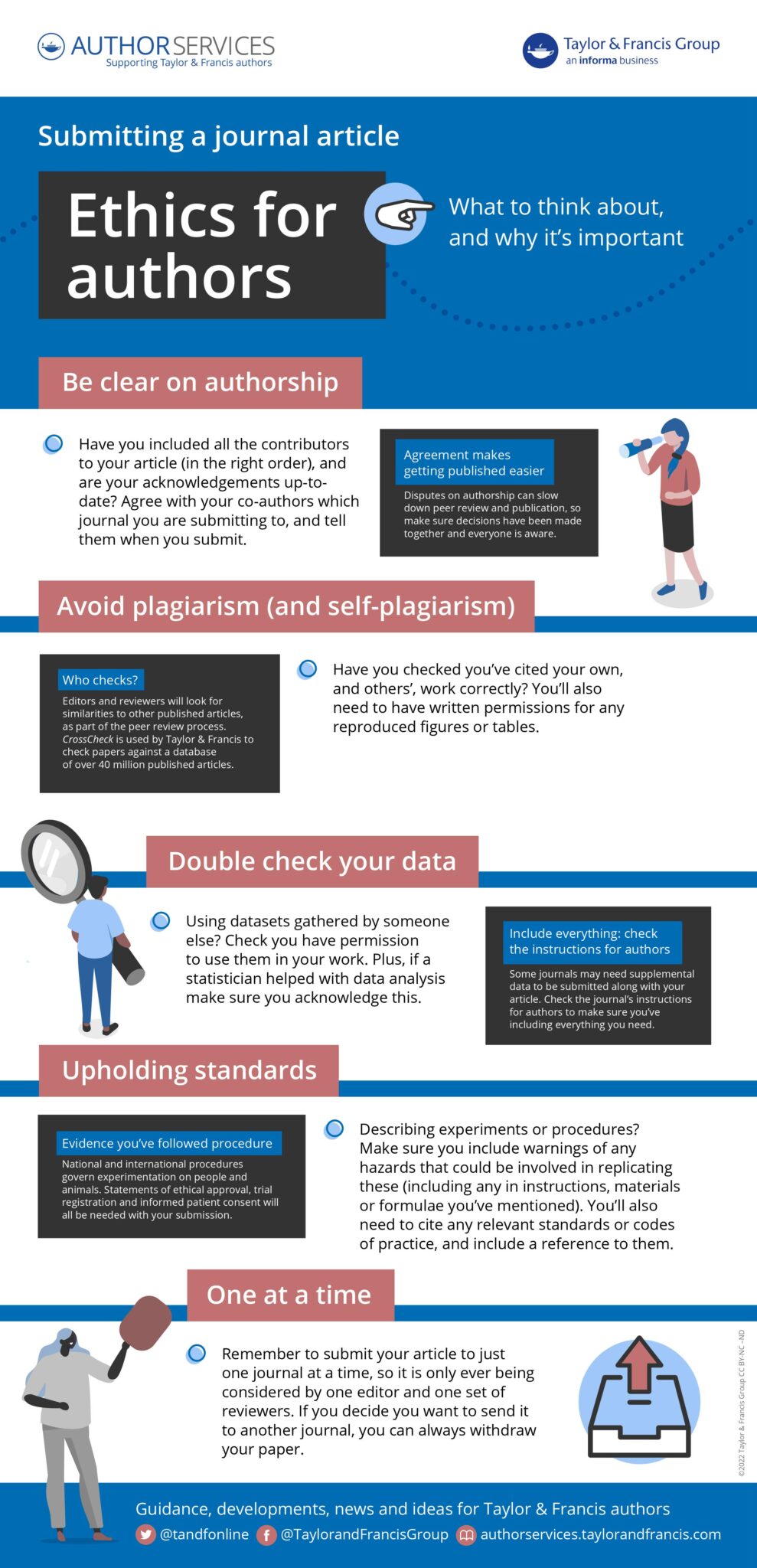
We asked John, our Editor, what three things authors should bear in mind when preparing their article for ERS.
Think about what you want to say in your paper within 9000 words. What is your key argument? How do you support your argument?”
Organise your paper so that you have a clear opening, a middle and a conclusion that brings your argument together. Are the various parts of your paper linked together?
Familiarise yourself with recent volumes of the journal you are submitting to. Are there links between your paper and the topics covered by the journal?

We asked Celia, our experienced Journal Manager (25 years at ERS!) for her top three pieces of advice:
Read the Instructions For Authors on our website before submitting your paper – does your paper fit our aims and scope, have you included all the required elements?”
Make sure you supply a version of your paper that is fully anonymised – including any ethics statements, references and acknowledgements – these can be changed at a later date.
If in doubt, then ask – send an email to the office if you need any further help or you have a question.

Amanda, the Managing Editor, also approaching 25 years at ERS, offers the following suggestions:
Ensure that your article is an excellent fit with the journal’s aims and scope.
Get a feel for the Journal prior to submission:
Look at What material they publish – regular issues, special issues, book reviews?
Offer Your services as a peer reviewer – this gives you a greater understanding of what will happen to your article when you submit
Connect and follow the Journal on social mediaGet feedback on your article before submitting:
Choose someone close to the topic to check content clarity
Choose someone outside your topic to check accessibility and argument flow
Early Career Board Members

“I always look to ERS for cutting-edge critical research on race, ethnicity, and immigration. And I encourage my students to do so as well.”
Tahseen Shams, author of Here, There, and Elsewhere: The Making of Immigrant Identities in a Globalized World

“Ethnic and Racial Studies remains, after 50 years, a leading journal for exploring the changing formations of race, ethnicity, and migration in a global context. It has shaped critical debates and brought together original insights, diverse voices, and critical perspectives from across disciplines and regions. The journal continues to publish theoretically rich and empirically grounded research that challenges conventional thinking and extends the boundaries of the field. What stands out is its global scope and openness to new ways of understanding social change, alongside its commitment to examining processes of racialisation, power, and inequality. Ethnic and Racial Studies remains an essential forum for dialogue, reflection, and debate on the complex and evolving realities of race and racism across different contexts.”
Doğuş Şimşek, Senior Lecturer, Kingston University London

“Being part of the Ethnic and Racial Studies Editorial Board has been a wonderful journey with inspirational colleagues! As the leading international journal in the areas of race, racism, ethnicity, migration and forms of ethno-nationalism, Ethnic and Racial Studies addresses these issues through publishing cutting edge empirical and theoretical work. It’s very rewarding to be involved in this journal. Happy 50th birthday Ethnic and Racial Studies!”
Dr Irene Zempi (She/Her), Associate Professor in Criminology, NTU
Upcoming events and conferences where the Editor in Chief and other ERS staff will be present and available to talk to
2026 BSA Annual Conference
8-10 April 2026
University of Manchester, UK
2026 Race & Media Conference
22-23 April 2026
University of Leeds, UK
2026 IMISCOE Spring Conference
29 June–2 July 2026
University of Girona
2026 ASA Annual Conference
7-11 August 2026
New York

SHARE THIS PAGE