
Submit a Manuscript to the Journal
International Journal of Vegetable Science
For an Article Collection on
Sustainable Intensification of Vegetable Production in Controlled Environments: Mechanisms, Innovations, and Global Applications
Manuscript deadline
Article Collection Guest Advisor(s)
Laura Cammarisano PhD,
University of California, Davis
[email protected]
Sustainable Intensification of Vegetable Production in Controlled Environments: Mechanisms, Innovations, and Global Applications
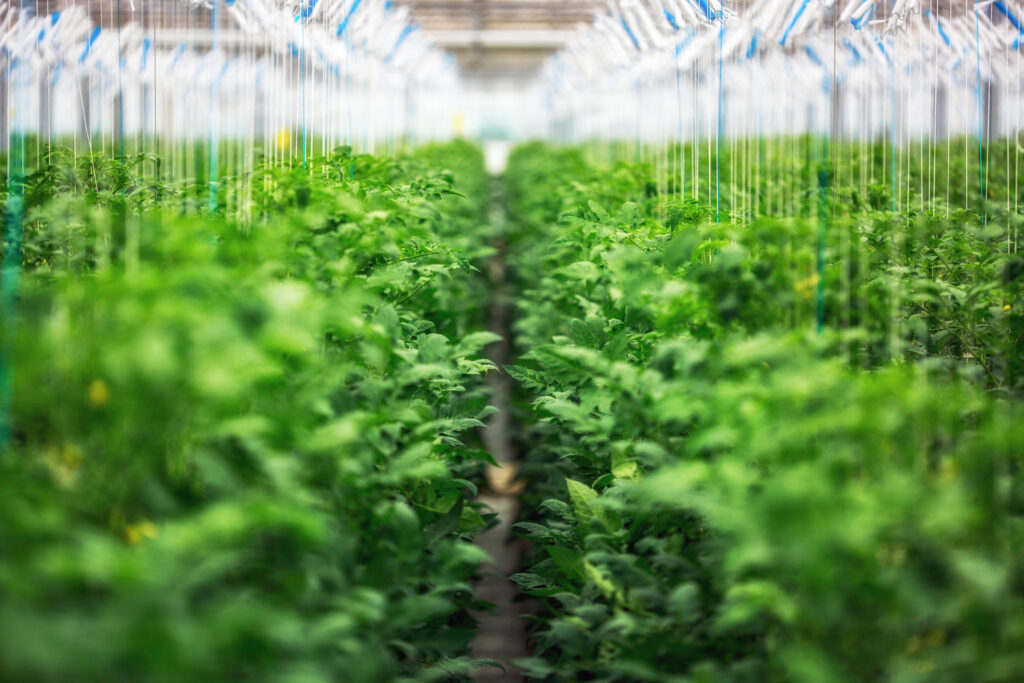
Sustainably intensifying vegetable production in controlled environments is critical to addressing global challenges in food security, climate resilience, and resource conservation. As populations grow and arable land becomes increasingly limited, traditional open-field vegetable production struggles to meet rising demand without compromising environmental integrity. Controlled environment systems offer a viable solution by enabling high-density, year-round cultivation with optimized water, nutrient, and energy use. Yet these systems must be carefully designed and managed to avoid unintended trade-offs, such as excessive energy and resource consumption and high input costs. Advancing our understanding of how plant physiology interacts with environmental controls and how system innovations can improve efficiency and scalability is essential to ensuring that CEA becomes not just productive, but truly sustainable. Furthermore, expanding access to sustainable protected cultivation can empower growers in both high-tech and resource-limited settings, reduce supply chain vulnerabilities, and enhance access to fresh, nutritious vegetables across diverse socio-economic and climatic regions.
Protected cultivation systems such as greenhouses, vertical farms, and other controlled environments offer transformative opportunities to sustainably intensify vegetable production. By enabling precise control over light, temperature, humidity, CO₂, and root-zone conditions, these systems can significantly improve yield and quality while minimizing land, water, and nutrient inputs. As global demand for fresh, nutritious vegetables grows under the pressure of climate change, urbanization, and resource constraints, controlled environments provide a scalable solution for resilient and efficient crop production. However, to fully realize their potential, research must move beyond productivity alone to uncover the physiological, technological, and systemic mechanisms that drive sustainability. This article collection invites original research and reviews that explore innovations in environmental control, resource-use efficiency, and system integration, with a focus on vegetable crops. Contributions may address plant responses, resource optimization, circular inputs, or socio-economic applications, aiming to bridge fundamental science and real-world practices across diverse global contexts.
This article collection focuses on advancing sustainable vegetable production within controlled environment systems, including greenhouses, vertical farms, and growth chambers. Submissions must align with the journal’s emphasis on vegetable crop science and address production-oriented challenges and innovations. We welcome studies that explore plant physiological responses to environmental controls such as light, temperature, humidity, and root-zone conditions; resource-use efficiency in water, nutrients, and energy; and the impact of system design on crop yield, quality, and sustainability. Additional topics include optimization of lighting strategies, substrates, fertigation, CO₂ enrichment, and climate control technologies tailored to vegetable crops. Research on genotype × environment interactions, circular input systems, and techno-economic assessments is also encouraged, provided they contribute to a deeper understanding of vegetable production in protected environments. All submissions must emphasize vegetable crops and offer insights applicable beyond local relevance, with robust methods, physiological or production-related outcomes, and clearly defined contributions to sustainable cultivation practices.
Dr. Laura Cammarisano is an Assistant Professor of protected horticulture in the Department of Plant Sciences at UC Davis, a position she has held since November 2024. Her research integrates expertise in plant physiology, abiotic stress response, and controlled environment agriculture. Her postdoctoral research at the Leibniz Institute of Vegetable and Ornamental Crops, in Germany, focused on non-invasive monitoring of plant response to abiotic stress in greenhouse and indoor farming. Dr. Cammarisano holds a Bachelor’s degree in biology from University of Calabria, Italy, and a PhD in plant sciences with a thesis on the optimization of artificial light for indoor plant cultivation from Aberystwyth University, United Kingdom.
Disclosure Statement: Laura Cammarisano declares no conflict of interest regarding this work.
Benefits of publishing open access within Taylor & Francis
Global marketing and publicity, ensuring your research reaches the people you want it to.
Article Collections bring together the latest research on hot topics from influential researchers across the globe.
Rigorous peer review for every open access article.
Rapid online publication allowing you to share your work quickly.
Submission Instructions
All manuscripts submitted to this Article Collection will undergo desk assessment and peer-review as part of our standard editorial process.
Please review the journal scope and instructions for authors prior to submitting a manuscript.
The deadline for submitting manuscripts is June 30th, 2026.
To submit your papers to this Article Collection, please:
- Check "yes" for the question, "Are you submitting your paper for a specific special issue or article collection?"
- Select the relevant Article Collection from the drop-down menu under the question, "Special Issue or Article Collection Name."
All manuscripts submitted to this Article Collection will undergo desk assessment and peer-review as part of our standard editorial process. Guest Advisors for this Collection will not be involved in peer-reviewing manuscripts unless they are an existing member of the Editorial Board. Please review the journal Aims and Scope and author submission instructions prior to submitting a manuscript.