
Submit a Manuscript to the Journal
Sustainable Environment
For an Article Collection on
Health, Environment, and Society: Pathways to a Sustainable Future
Manuscript deadline

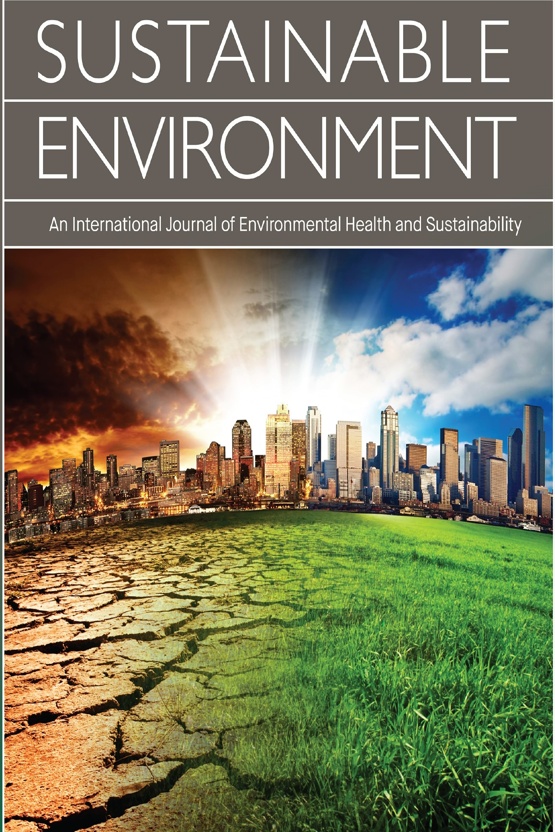
Article Collection Guest Advisor(s)
Dr. Josephine Adekola,
University of Glasgow
[email protected]
Dr. Lucy Pickering,
University of Glasgow
[email protected]
Dr. Michelle Bloor,
University of Glasgow
[email protected]
Health, Environment, and Society: Pathways to a Sustainable Future
Humans shape their environments, from their immediate settings to impacting global weather, climate and ecosystems. Our health is profoundly shaped by the environments in which we live and dwell. It is this bi-directional flow which is the focus of this Article Collection. When we put carbon into the atmosphere, replace rainforests with monocropped farming, and ever-increasing numbers of us drive cars, we alter the environments in which we and other species live. But the ‘we’ of this statement are rarely the ones who bear the brunt of the harm that comes – rising air pollution, lack of access to clean, drinkable water, or unsafe streets. For, as we saw in the way the Covid-19 pandemic played out, we were not ‘all in it together’, and the greatest harms were felt by the already most vulnerable. From local to national to international scales, those who have the greatest impact on environments are not necessarily those who feel the health harms.
This complexity – unequal capacity to shape environments, unequal impacts of environmental conditions, unequal access to basic healthcare, and the challenges of modelling, predicting, and planning for environmental change – constitutes the wicked problems of health and environment, from local to global levels. This highlights issues of environmental justice and inequality and shows how our actions (such as carbon emissions) can affect our health, the environment, and the health of other species. Wicked problems require ambitious thinking and interdisciplinary understanding.
This Collection will explore the dynamic two-way relationship between humans and the environment, emphasising the urgent challenges at the intersection of environmental justice, health, and climate change. We seek submissions that specifically address the causes and consequences of inequality, effective strategies for risk prediction and mitigation, and the wide-ranging health impacts on humans and other species.
We welcome original research, reviews, short communications, and policy papers in these areas (but not limited to):
- Global Health
- Planetary health
- One health
- Health inequalities
- Anthropocene
- Environment
- Climate change
- Biodiversity loss
- Pollution
- Waste
- Community resilience
- Sustainability
- Risk management
- Power imbalance and
- Inequalities
Keywords:
- Global Health
- Environment
- Community Resilience
- Wicked problems
- Addressing inequalities
All manuscripts submitted to this Article Collection will undergo a full peer-review; the Guest Advisor for this Collection will not be handling the manuscripts (unless they are an Editorial Board member).
Please review the journal scope and author submission instructions prior to submitting a manuscript.
The deadline for submitting manuscripts is January 20, 2027.
Please contact Commissioning Editor Kara Roberts at [email protected] with any queries on discount codes regarding this Article Collection.
Please be sure to select the appropriate Article Collection from the drop-down menu in the submission system.
Josephine Adekola is a Senior Lecturer at the University of Glasgow, Adam Smith Business School. Dr. Adekola is an Associate of the School of Health and an Interdisciplinary Research Theme Lead for Global Health and Environment.
Lucy Pickering has been with the University of Glasgow since 2010. She received her BA in Archaeology and Anthropology from Cambridge University in 2001, and her MA in Anthropological Research from Manchester University in 2003. She completed her PhD on embodiment and American counterculture at Manchester University in 2007. Before joining Glasgow University, she worked on a range of collaborative projects around bodies, embodiment and drug use at Liverpool John Moores University and Oxford Brookes University.
Michelle Bloor is an ecotoxicologist in the arena of chemicals, waste and pollution. She has two undergraduate degrees: BEd (Hons) Science in the Environment (University of Oxford) and BSc (Hons) in Environmental Science (Manchester Metropolitan University), and a PhD in Environmental Engineering (University of Southampton). Over the past 25 years as a government scientist and academic, Michelle has been involved in a plethora of assessments, policy developments, research projects, and other activities related to addressing the sound management of chemicals, waste and pollution.
Guest Advisors do not declare any potential conflicts of interests in line with our Editorial Policies.
Benefits of publishing open access within Taylor & Francis
Global marketing and publicity, ensuring your research reaches the people you want it to.
Article Collections bring together the latest research on hot topics from influential researchers across the globe.
Rigorous peer review for every open access article.
Rapid online publication allowing you to share your work quickly.
Submission Instructions
All manuscripts submitted to this Article Collection will undergo desk assessment and peer-review as part of our standard editorial process. Guest Advisors for this Collection will not be involved in peer-reviewing manuscripts unless they are an existing member of the Editorial Board. Please review the journal Aims and Scope and author submission instructions prior to submitting a manuscript.