
Submit a Manuscript to the Journal
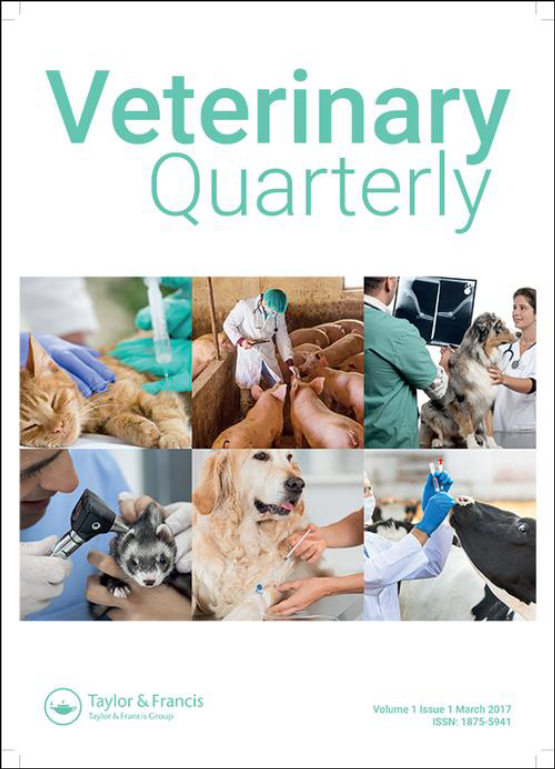
Veterinary Quarterly
For an Article Collection on
Bovine Reproduction
Manuscript deadline

Article Collection Guest Advisor(s)
Prof. Peter J. Hansen,
University of Florida, USA
Dr. Stephen Butler,
TEAGASC, Ireland
Prof. Ana Meikle,
Universidad de la República de Uruguay, Uruguay
Bovine Reproduction
The article collection called “Bovine Reproduction” serves as a platform for innovations in animal science and veterinary medicine that enhance cattle fertility and that facilitate new and emerging reproductive technologies important for genetic selection, increasing calf value, and improving the efficiency of milk and meat production. The collection seeks papers that represent meaningful advances in any aspect of reproductive biology, management, and technology in female or male cattle.
The reproductive process is key to optimizing profitability and sustainability of both dairy and beef cattle. Long intervals between calvings reduce milk yield of dairy cattle. Moreover, seasonal dairy production systems require a high proportion of cows to become pregnant during a limited breeding season. In beef cattle systems, over 50% of the energy required to produce a unit of edible product is allocated to the female that produced the market animal. Poor reproductive function leads to high rates of involuntary culling and reduced longevity for all cattle production systems. Reproduction is highly influenced by environmental influences such as nutrition, thermal environment, and disease incidence, and there is large variation among animals and herds in reproductive function of female and male cattle. Historically, progress in genetic selection in both dairy and beef systems has been enhanced by reproductive technologies such as artificial insemination and embryo transfer. Further advances in genetic progress will depend in part on the development of new reproductive technologies as well as the optimization of existing technologies.
All article types consistent with Veterinary Quarterly’s author guidelines are welcome.
Among the non-exclusive topics that would fit within the collection are the following:
- The biology of reproduction, including control of follicular growth, spermatogenesis, ovulation, and pregnancy.
- Nutritional and environmental effects on reproduction, including programming of the offspring.
- Intersection of health and reproduction, including reproductive diseases and the impact of non-reproductive diseases on fertility.
- Management interventions affecting the reproductive process.
- Assisted reproductive technologies such as estrous synchronization, timed artificial insemination, in vivo and in vitro embryo production, and embryo transfer.
- Development in stem cell biology pertinent to reproduction.
Keywords: reproduction, pregnancy, puberty, artificial insemination, embryo technologies
Guest Advisors
Prof. Peter J. Hansen, PhD, is a distinguished professor and L.E. “Red” Larson Professor in the Dept. of Animal Sciences at the University of Florida, where he has worked since 1986. Working primarily with the cow, his research focuses on the physiology and genetics of early pregnancy and thermal biology and development of methods to improve fertility, enhance assisted reproductive technologies, and develop genetic and physiological strategies to reduce the impact of heat stress. Hansen received the B.S. from the University of Illinois in 1978 and the M.S. and Ph.D. degrees from the University of Wisconsin in 1980 and 1983. He did a postdoctoral fellowship at the University of Florida from 1983-1984 before joining the faculty at Florida as an assistant professor in 1984. He is a Fellow of the American Association for the Advancement of Science, American Dairy Science Association (ADSA) and American Society of Animal Science (ASAS) and Distinguished Fellow of the Society for the Study of Reproduction (SSR). He has won the highest awards given by the American Society for Reproductive Immunology (ASRI), ADSA, ASAS and the International Embryo Technology Society (IETS). Among his leadership posts, he has been President of ASRI, the International Congress of Animal Reproduction, IETS and SSR. He has published over 350 papers (see https://scholar.google.com/citations?user=MwJ5dhUAAAAJ&hl=en).
Dr. Stephen Butler, PhD, graduated with a bachelor’s degree in Agricultural Science from University College Dublin in 1997 and received an MSc from the same university in 1999. He subsequently undertook a PhD in the Department of Animal Science at Cornell University, graduating in 2004. Upon returning to Ireland, he took up a research position with Teagasc, where he is currently a Principal Research Scientist and group leader for dairy cattle reproduction research at Moorepark, located in County Cork. His main areas of research include Investigating the genetic basis of sub-fertility, developing oestrus and ovulation synchronization protocols for seasonal calving systems, examining the effects of micronutrients on reproductive physiology in dairy cows, designing strategies for the use of sex-sorted semen in dairy herds, and applying assisted reproductive technologies to accelerate genetic gain in elite dairy and beef breeds. In 2011, Stephen completed a part-time MSc in Bioinformatics and Systems Biology at University College Cork. Stephen has served as a section editor for Livestock Science (2013–2015) and the Journal of Dairy Science (2016–2021) and as a guest editor for Animal (2014, 2018, and 2023). He has published over 100 peer-reviewed scientific papers. The link to his Scopus page is https://www.scopus.com/authid/detail.uri?authorId=35596953000.
Prof. Ana Meikle, DVM, PhD, is a professor and director of the Animal Endocrinology and Metabolism Laboratory in the Veterinary Faculty of the University of Uruguay. She obtained the DVM at the Veterinary Faculty, Uruguay, in 1995 and obtained the PhD at the Swedish University of Agricultural Sciences, Uppsala, and at the Karolinska Institute, Stockholm, Sweden, in 2001. She oversees a program of applied and basic research focused on ruminant nutrition, metabolism, and reproductive endocrinology. A recent focus has been on cow health and the interaction between the endocrine and immune systems in the dairy cow. She is the author or co-author of over 120 papers. Meikle is a member of the National Academy of Sciences of Uruguay, the National Academy of Veterinary Sciences of Uruguay, National Research System Level III and the steering committee of the International Congress of Animal Reproduction. She also serves as Professor Ad Hoc of Animal Reproduction at the University of Massey and as an expert for the International Atomic Energy Agency. She is the recipient of the Woman in Science LÓreal-Unesco Award (2015), the National Veterinary Academy Award (2003 and 2015), and the Morosoli Award (2009). The link to her Scopus page is https://www.scopus.com/authid/detail.uri?authorId=36786712900.
Disclosure statement: All Guest Advisors declare no conflict of interest.
All manuscripts submitted to this Article Collection will undergo desk assessment and peer-review as part of our standard editorial process; the Guest Advisor for this Collection will not be handling the manuscripts (unless they are an Editorial Board member).
Please review the journal scope and author submission instructions prior to submitting a manuscript.
The deadline for submitting manuscripts is December 31st, 2026.
Please contact Ruby Ru at [email protected] with any queries and discount codes regarding this Article Collection.
To submit your papers to this Article Collection, please:
- Check "yes" for the question, "Are you submitting your paper for a specific special issue or article collection?"
- Select the relevant Article Collection from the drop-down menu under the question, "Special Issue or Article Collection Name."
Benefits of publishing open access within Taylor & Francis
Global marketing and publicity, ensuring your research reaches the people you want it to.
Article Collections bring together the latest research on hot topics from influential researchers across the globe.
Rigorous peer review for every open access article.
Rapid online publication allowing you to share your work quickly.
Submission Instructions
All manuscripts submitted to this Article Collection will undergo desk assessment and peer-review as part of our standard editorial process. Guest Advisors for this Collection will not be involved in peer-reviewing manuscripts unless they are an existing member of the Editorial Board. Please review the journal Aims and Scope and author submission instructions prior to submitting a manuscript.