

Submit a Manuscript to the Journal
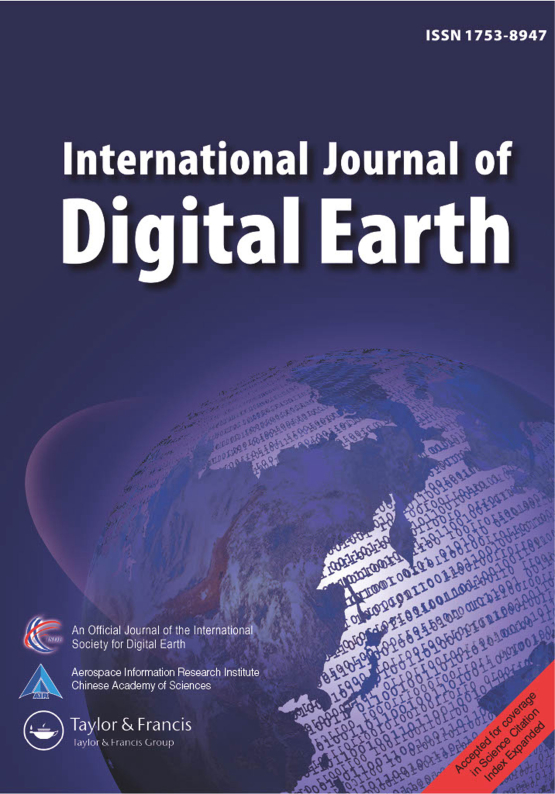
International Journal of Digital Earth
For an Article Collection on
Advancing GeoAI: From Machine Learning to Foundation Models for Explainable and Generative Geospatial Intelligence
Manuscript deadline

Article Collection Guest Advisor(s)
Professor Ali Mansourian,
Lund University, Sweden
[email protected]
Professor Maria Antonia Brovelli,
Politecnico di Milano, Italy
[email protected]
Associate Professor Hamed Alemohammad,
Clark University, USA
[email protected]
Anwaar Alshimmari,
Federal Geographic Information Center, UAE
[email protected]
Advancing GeoAI: From Machine Learning to Foundation Models for Explainable and Generative Geospatial Intelligence
Geospatial Artificial Intelligence (GeoAI) has become a transformative force in Digital Earth research, combining advances in spatial data science, remote sensing, and machine learning to enhance our understanding of dynamic Earth systems. Over the past decade, GeoAI has evolved from conventional machine learning and deep learning methods to embrace more sophisticated and flexible frameworks powered by large-scale foundation models and generative AI. These developments are enabling new ways of acquiring, integrating, and interpreting heterogeneous geospatial data while opening opportunities for natural language-driven spatial analysis, autonomous mapping, and predictive Earth system modelling. As GeoAI matures, it is reshaping the way researchers, practitioners, and decision-makers engage with complex spatial information, bridging human and artificial intelligence to create more intelligent, adaptive, and interactive representations of our planet.
Understanding and managing global environmental and societal challenges, such as climate change, urbanization, biodiversity loss, disaster resilience, and sustainability, requires innovative analytical frameworks capable of handling the vast and complex geospatial data now available. The integration of GeoAI and Digital Earth technologies provides a foundation for this transformation, offering scalable, explainable, and automated solutions to analyze spatial patterns and processes. At the same time, the rise of foundation models and generative AI introduces new capabilities for knowledge discovery, data synthesis, and simulation. However, these advances also bring challenges related to transparency, interpretability, and ethical deployment. Addressing these questions is essential to ensure that GeoAI contributes not only to scientific innovation but also to trustworthy, inclusive, and sustainable decision-making.
This Article Collection aims to advance the state of GeoAI by encompassing the full spectrum of methods, from traditional geospatial machine learning to foundation model–driven generative intelligence. Subtopics include geospatial data mining, spatial deep learning, explainable and interpretable GeoAI, Geo-LLMs and multimodal models, generative Earth data synthesis, GeoAI agents, and natural language interfaces for geospatial systems. We also welcome studies on responsible, ethical, and human-centered applications of GeoAI in environmental monitoring, urban planning, disaster management, and sustainability. The Collection invites research articles and review papers (gap analysis, state-of-the-art analysis, critical perspectives, vision paper, and future trends as well discussions on government directions and policy frameworks), accepted by the International Journal of Digital Earth, that highlight conceptual advances, novel methodologies, and transformative applications of GeoAI in the Digital Earth context.
Article Collection Guest Advisors:
Ali Mansourian is a Professor of Geomatics at the Department of Physical Geography and Ecosystem Science, Lund University, Sweden. He serves as the Director of the Lund University GIS Centre, the coordinator of the “GIS & RS Master Programme”. He is also an active member of the United Nations Global Geospatial Information Management (UN-GGIM) Academic Network and a former council member of the European Association of Geographic Information Laboratories in Europe (AGILE). Prof. Mansourian has pioneered research in Geospatial Artificial Intelligence (GeoAI), Spatial Data Infrastructures (SDI), and Multi-Criteria Decision Analysis (MCDA) using multi-objective optimization techniques. His extensive research portfolio also includes the application of Geographic Information Systems (GIS) in diverse areas such as epidemiology and public health, disaster risk management, land-use planning, climate change, environmental management, and sustainability. Throughout his career, Prof. Mansourian has demonstrated exceptional leadership in large-scale international and national research initiatives and capacity-building projects, including those funded by Erasmus+ and SIDA. His extensive experience spans coordinating multidisciplinary teams, evaluating proposals for major European research grant programs, chairing and organizing scientific programs for international conferences and workshops, supervising PhD students and postdoctoral researchers, serving as an invited evaluator for PhD theses, and publishing over 180 scientific works comprising journal articles, conference papers, books, book chapters, and technical reports.
Maria A. Brovelli is a Full Professor at Politecnico di Milano (PoliMI), where she has devoted nearly her entire career, also serving as Vice-Rector for the Como Campus. With a background in Physics and a Ph.D. in Geodesy and Cartography, she has become a leading figure in geomatics and open-source geospatial technologies. She holds key international positions, including Vice President of ISDE and of the ISPRS Technical Commission on Spatial Information Science, and serves on the UN-GGIM Academic Network Advisory Board. Her research covers geodesy, radar-altimetry, GIS, webGIS, VGI, Citizen Science, Big Geo Data, and GEOAI. Recognized for her scientific excellence, she has received multiple awards, contributed extensively to major research programs such as Horizon2020, Interreg, Erasmus+, and ESA, and serves as Associate Editor of International Journal of Digital Earth and ISPRS Journal of Geo-Information.
Hamed Alemohammad is an Associate Professor in the Graduate School of Geography and Director of the Center for Geospatial Analytics at Clark University. His research bridges geospatial analytics, remote sensing, and artificial intelligence to better understand the changing Earth system. He has led multiple projects advancing AI models for multispectral, microwave, and SAR satellite data, with recent work focused on geospatial foundation models. Before joining Clark, Hamed was Chief Data Scientist and Executive Director at Radiant Earth, where he led the development of Radiant MLHub, an open repository for geospatial training data and AI models. He holds a Ph.D. in Civil and Environmental Engineering from MIT.
Anwaar Alshimmari is the Executive Director of the Geospatial Governance Sector at the UAE Federal Geographic Information Center (FGIC). She leads national initiatives in geospatial policy, governance, and knowledge infrastructure, driving the UAE’s transition from Spatial Data Infrastructure (SDI) to Geospatial Knowledge Infrastructure (GKI). Her research focuses on urban resilience, hydrology, and spatial and urban governance, with an emphasis on innovative city development and infrastructure systems. Alshimmari is an active member of several international and UN-GGIM committees dedicated to geospatial capacity development and digital transformation. She also serves as a keynote speaker and advisor, championing data-driven innovation and sustainable geospatial ecosystems across the Arab region.
Submission information:
All manuscripts submitted to this Article Collection will undergo a full peer-review; only Guest Advisors who are Associate Editors for the Journal (Professors Mansourian and Brovelli) will be handling manuscripts submitted to this Collection.
Please review the journal scope and author submission instructions prior to submitting a manuscript.
Please contact Commissioning Editor Alex Johnson at [email protected] with any queries about submission guidelines or discount codes regarding this Article Collection.
The deadline for submitting manuscripts is 31 August 2026
Please be sure to select the appropriate Article Collection from the drop-down menu in the submission system.
Benefits of publishing open access within Taylor & Francis
Sustained readership
Publishing in an Article Collection ensures your research reaches a wide and engaged audience, driving long-term readership and citation impact.
Enhanced visibility
Gain recognition by showcasing your work in a trusted and reputable platform, amplifying your research’s visibility and influence.
Trends and methodologies
Connect with emerging topics and methodologies, positioning your research at the forefront of innovation and shaping the future of your field.
Support
Receive expert guidance at every stage of the publishing process from our experienced journal team, ensuring a seamless experience.
Network
Expand your professional network by collaborating with leading researchers from around the world, fostering interdisciplinary connections.
All manuscripts submitted to this Article Collection will undergo desk assessment and peer-review as part of our standard editorial process. Guest Advisors for this Collection will not be involved in peer-reviewing manuscripts unless they are an existing member of the Editorial Board. Please review the journal Aims and Scope and author submission instructions prior to submitting a manuscript.