
Submit a Manuscript to the Journal
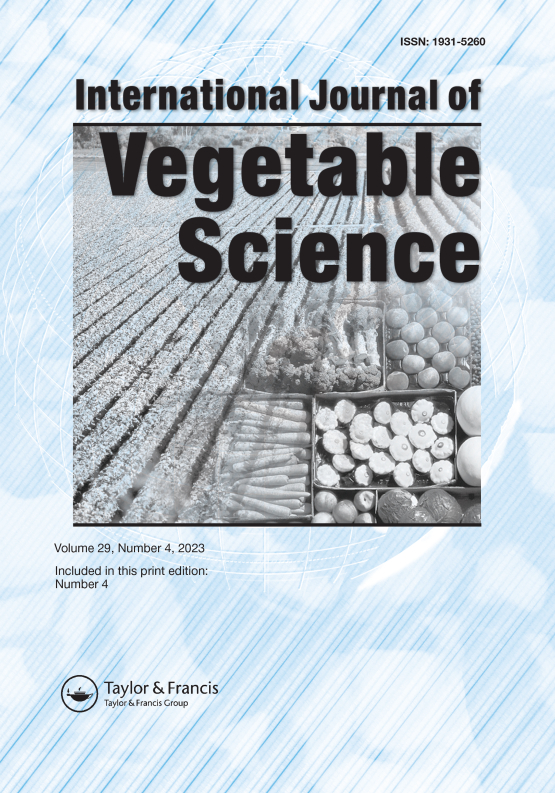
International Journal of Vegetable Science
For an Article Collection on
Advanced Strategies in Precision Nutrient Management and Climate Stress Adaptation in Vegetable Production
Manuscript deadline
Article Collection Guest Advisor(s)
Dr. Muhammad Khalid Hameed,
Beijing Jingwa Agricultural Science and Technology Innovation Center
[email protected]
Dr. Fatjon Cela,
University of Pisa
[email protected]
Dr. Li Di,
Institute of Geographical Sciences, Henan Academy of Sciences
[email protected]
Advanced Strategies in Precision Nutrient Management and Climate Stress Adaptation in Vegetable Production
Vegetables are essential for global nutrition, providing key vitamins, minerals, and bioactive compounds that support human health. However, climate change–driven stresses such as heat, drought, salinity, flooding, and nutrient imbalances are reducing both yields and quality, directly threatening food security. Precision nutrient management leverages data-driven technologies to enable timely, site-specific nutrient applications, minimize losses due to leaching or volatilization, and support soil health amid evolving climate conditions. Complementary climate adaptation strategies—such as breeding stress-tolerant cultivars, adopting hydroponics or vertical farming, and expanding protected cultivation—help sustain productivity amid rising temperatures and water shortages. These methods are crucial to meet the growing global demand for sustainable, high-quality vegetables. This collection of articles will explore these links, address knowledge gaps, and promote evidence-based practices. It involves researchers, practitioners, and policymakers to support resilient vegetable production systems that meet global food security and environmental sustainability objectives.
Dr. Muhammad Khalid Hameed has completed his PhD from the School of Agriculture and Biology at Shanghai Jiao Tong University, Shanghai, China. He is currently working as a research fellow at the Beijing Jingwa Agricultural Science and Technology Innovation Center, Beijing, China. His research work is focused on the nutrient strategies for improving lettuce biomass, quality, and metabolite production under different nutrient management systems. Another aspect of his work is developing plants that can withstand increased abiotic stresses, aligning strategically with urgent global challenges and precision agriculture
Dr. Fatjon Cela is a post-doctoral researcher at the University of Pisa. He obtained the PhD (cum laude) in Agriculture, Food and Environment at the University of Pisa, investigating how the Arbuscular Mycorrhizal Fungi (AMF) can influence plant response to sub-optimal or stressful growing conditions in semi-artificial cropping systems. His research topics include Precision Agriculture, Crop Modeling, Protected Horticulture, Hydroponics, Plant Nutrition, Irrigation, Fertigation, Salinity Stress, Arbuscular Mycorrhizal Fungi, and Biostimulants.
Dr. Li Di has completed her PhD from the Institute of Soil Science, Chinese Academy of Sciences, Nanjing, China, and is currently working as an assistant research fellow at the Institute of Geographical Sciences, Henan Academy of Sciences, Zhengzhou, China. She investigated the effects of climate change, nitrogen form, and nitrogen supply on the growth, yield, photosynthesis, and nitrogen absorption of vegetables. She also quantified the soil nitrogen transformation process and determined how soil properties and microbial communities regulate soil nitrogen transformation. Her research heavily focuses on improving yield and quality in vegetable production under controlled conditions environments.
Disclosure Statement: Muhammad Khalid Hameed, Fatjon Cela, and Li Di declare no conflict of interest regarding this work.
Benefits of publishing open access within Taylor & Francis
Global marketing and publicity, ensuring your research reaches the people you want it to.
Article Collections bring together the latest research on hot topics from influential researchers across the globe.
Rigorous peer review for every open access article.
Rapid online publication allowing you to share your work quickly.
Submission Instructions
This Collection invites research on integrating precision nutrient management with climate stress
adaptation strategies to advance sustainable vegetable production. We invite original research and
scholarly reviews on topics like optimized fertilizer application, AI-driven nutrient modeling, climate-responsive fertigation scheduling, and innovative delivery systems designed for changing environmental conditions. Studies may also address genotype–nutrient–environment interactions, nutrient-use efficiency in hydroponics, vertical farming, and protected cultivation, as well as real-time decision-support tools for nutrient optimization under climate stress. Contributions should explore how advanced nutrient strategies influence crop physiology, productivity, quality, sustainability, and climate resilience. Accepted article types encompass original research, critical short and comprehensive reviews, policy analyses, and applied case studies. The Collection provides a platform for interdisciplinary insights that foster adaptive, efficient, and climate-resilient nutrient strategies. Its goal is to support sustainable vegetable production systems and enhance global food security amid climate challenges.
All manuscripts submitted to this Article Collection will undergo desk assessment and peer-review as part of our standard editorial process.
Please review the journal scope and instructions for authors prior to submitting a manuscript.
The deadline for submitting manuscripts is June 30th, 2026.
To submit your papers to this Article Collection, please:
- Check "yes" for the question, "Are you submitting your paper for a specific special issue or article collection?"
- Select the relevant Article Collection from the drop-down menu under the question, "Special Issue or Article Collection Name."
All manuscripts submitted to this Article Collection will undergo desk assessment and peer-review as part of our standard editorial process. Guest Advisors for this Collection will not be involved in peer-reviewing manuscripts unless they are an existing member of the Editorial Board. Please review the journal Aims and Scope and author submission instructions prior to submitting a manuscript.