
Social Media Editor needed for
Research Synthesis in Applied Linguistics
About the role
Social Media Editor Recruitment – Research Synthesis in Applied Linguistics
Research Synthesis in Applied Linguistics is currently recruiting for a Social Media Editor.
This is an excellent opportunity for academics with a strong track record in Applied Linguistics and experience in academic social media promotion and digital engagement.
We are seeking engaged subject matter experts who will contribute to the strategic growth of the journal by amplifying our content, acting as ambassadors within the research community, and helping shape the journal's digital presence.
In this role, you will:
- Develop and execute social media strategies to promote journal content across platforms including X (Twitter), LinkedIn, and other relevant channels
- Create engaging posts highlighting new articles, Special Issues, and key research findings to maximize reach and impact
- Monitor trends in academic social media and identify opportunities to enhance the journal's visibility and engagement
- Collaborate with the Editors and Publisher to align social media activity with the journal's strategic goals
- Represent the journal at conferences and events, promoting content and engaging with the research community both online and in person
- Contribute insights on digital metrics and audience engagement during scheduled Editorial team meetings
Joining an editorial team is a rewarding journey that enables you to influence the future of your field. You will advance the latest research in your discipline, expand your professional network, and be recognized as a leading figure in the community.
The role offers:
- Free access to journal content on tandfonline.com
- 30% discount on books at routledge.com
- Access to Taylor & Francis editorial resources and training
- Formal recognition of your contribution on the journal's Editorial Board page
The appointment will start as soon as possible.
About the Journal
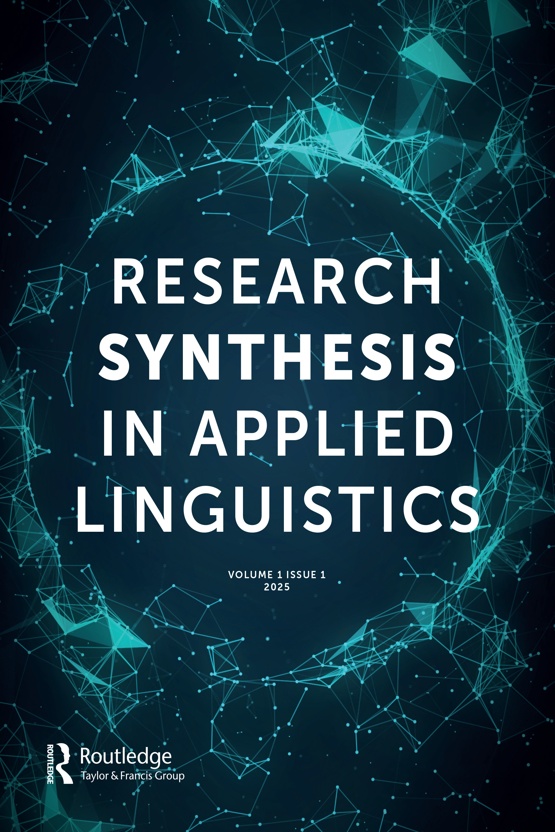
This journal is methodological in focus, so it welcomes research syntheses on all topics in Applied Linguistics, but especially those that have a strong relevance to professional practice (e.g., language teaching, learning, and assessment).
Research syntheses, or evidence syntheses, are a type of secondary research that employs systematic, transparent, reproducible, and often pre-registered methodologies to synthesise published research (Chong & Plonsky, 2023; Chong & Plonsky, 2024). The focus of research syntheses can be substantive (e.g., language testing, translanguaging) and/or methodological (e.g., narrative inquiry). In the field of Applied Linguistics, meta-analyses are traditionally the predominant form of research synthesis, accounting for most of the published synthetic work. Nevertheless, this journal welcomes submissions of not only meta-analyses but other emergent types of research syntheses, especially those that employ qualitative methodologies (e.g., qualitative research synthesis, scoping review, systematic literature review) as well as methodological papers on the specific stages of conducting a research synthesis.
Watch this video to understand more about what research synthesis is in Applied Linguistics. The Research Synthesis in Applied Linguistics Special Interest Group of the British Association for Applied Linguistics (BAAL) organise events on conducting research syntheses; their website also hosts relevant resources and information.
The editorial team and publisher are not responsible for the accuracy of the translation or information written in any language other than English.
Key Skills and Attributes
Ready to apply? We're seeking candidates who demonstrate:
Digital Engagement & Content Strategy
- Proven experience in managing academic or professional social media accounts with measurable engagement and growth
- Strong understanding of platform-specific best practices for X (Twitter), LinkedIn, and other relevant academic social channels
- Ability to translate complex research into accessible, engaging social media content that resonates with diverse audiences
- Creative approach to visual and written content creation
- Knowledge of social media analytics tools and ability to interpret metrics to optimize content performance
Subject Matter Expertise & Community Building
- Recognized expertise and active presence within the Applied Linguistics research community
- Established professional network across social media platforms relevant to the discipline
- Track record of engaging authentically with academic communities online and fostering meaningful dialogue
- Experience promoting scholarly content, conferences, or research initiatives through digital channels
Operational Proficiency
- Ability to commit regular time each week to develop, schedule, and monitor social media content
- Consistent, timely execution of social media campaigns aligned with journal publication schedules
- Willingness to participate in Editorial Board meetings and training as needed
- Proactive collaboration with Taylor & Francis staff, Editors, and marketing teams to align digital strategy with journal goals
Communication & Integrity
- Excellent written communication skills with attention to tone, clarity, and audience appropriateness
- Professional, responsive engagement with followers, authors, and the broader research community
- Uncompromising ethical standards in digital communication and knowledge of best practices in academic social media use
- Commitment to representing the journal with professionalism and enthusiasm across all digital platforms
Application instructions
Your Cover Letter should be no longer than 500 words and include how you would:
- Develop and implement a social media strategy to promote journal content across X (Twitter), LinkedIn, and other relevant platforms
- Create engaging, accessible content that highlights new articles, Special Issues, and key research findings to maximize visibility and impact
- Monitor and analyze social media metrics to assess engagement and refine content strategies
- Build and nurture online communities within Applied Linguistics, fostering dialogue between authors, readers, and the broader research community
For any questions or the role profile, please contact Kate Morse, [email protected]
Did you know?
Joining a Taylor & Francis journal as an Editor or Board member brings many personal and professional benefits.
Find more roles in your subject area with our Editor Recruitment search tool.
The journal is committed to ensuring diversity, equity and inclusion within its editorial team and decision making processes. All applications will be treated as strictly confidential, and each will be judged on its merits without bias for seniority of institutional affiliation. We do not discriminate on the basis of race, color, ancestry, national origin, religion, or religious creed, mental or physical disability, medical condition, genetic information, sex (including pregnancy, childbirth, and related medical conditions), sexual orientation, gender identity, gender expression, age, marital status, military or protected veteran status, citizenship, or other protected characteristics.